
Commercial Solar Incentives Texas: 2026 Guide for Growing Businesses
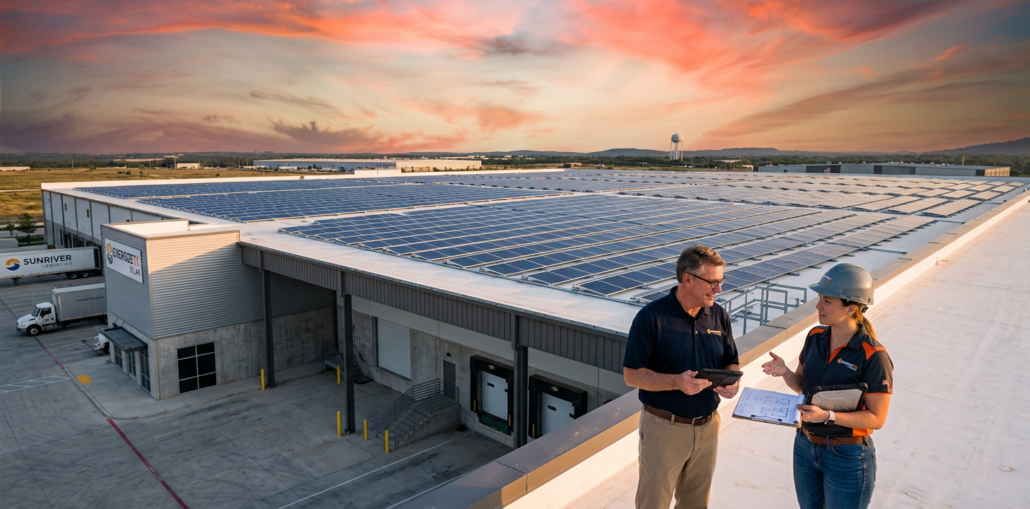
For Texas businesses, a solar proposal should never be judged by panel count alone. The stronger question is whether the project reduces long-term operating costs, fits the facility’s load profile, protects cash flow, and can be documented correctly for available incentives.
That is why Commercial Solar Incentives Texas remains an important subject for property owners, dealers, and sales partners. The incentive landscape is more deadline-driven than it was a few years ago, so strong projects need careful design, credible assumptions, and an installation partner that can support the customer long after commissioning.
The Incentive Landscape Has Changed
The primary federal opportunity for many qualifying commercial solar and energy-storage investments has been the Clean Electricity Investment Credit under Section 48E. The IRS identifies Section 48E as an investment credit for qualifying clean electricity generation and energy storage placed in service after December 31, 2024. Solar is included among the listed qualifying facility types. IRS Publication 5884 provides the current program framework. (irs.gov)
However, timing matters. IRS guidance explains that applicable solar facilities that begin construction after July 4, 2026 and are placed in service after December 31, 2027 are subject to the statutory credit termination rules. A project that started physical work before July 5, 2026 may be evaluated differently, but the documentation and continuity requirements are substantial. IRS Notice 2025-42 is essential reading for owners and advisors reviewing eligibility. (irs.gov)
This is not a reason to rush into a poor deal. It is a reason to separate credible commercial planning from generic sales messaging. We recommend that every prospect review tax eligibility with a qualified tax professional before treating any credit as part of a final financial model.
| Incentive or Value Driver | Potential Business Impact | Key Verification Step |
|---|---|---|
| Federal Section 48E credit | Reduces eligible project cost | Confirm construction and placed-in-service dates |
| Texas property-tax exemption | Helps protect assessed-value economics | File with the local appraisal district |
| Utility export arrangement | Influences solar production value | Review retail plan and interconnection terms |
| Battery storage | Can reduce peak demand and improve resilience | Model interval load data |
| Energy efficiency work | Can complement solar economics | Coordinate scope with building upgrades |
Federal Credit Planning Requires Real Documentation
Commercial buyers often hear a simple percentage mentioned in conversations about tax credits. In practice, the available credit amount can depend on project facts, including wage and apprenticeship rules, ownership structure, facility type, timing, and any applicable bonus-credit requirements. A responsible sales conversation frames tax benefits as a coordinated effort among the customer, installer, tax advisor, and financing team.
For qualifying facilities below five megawatts, the Low-Income Communities Bonus Credit program can add 10% or 20% to the Section 48E credit in defined circumstances. The IRS states that the program’s 2026 capacity limitation is 1.8 gigawatts, which shows why qualification, allocation, and project maturity should be handled early rather than treated as an afterthought. IRS Low-Income Communities Bonus Credit Program outlines the categories and allocation process. (irs.gov)
For dealers, this is where trust is won or lost. Do not promise a tax result. Instead, explain what the project team will document, identify assumptions in writing, and bring the customer’s tax professionals into the process before a final commitment.

Texas Incentives Beyond the Federal Credit
Texas does not offer one uniform statewide cash rebate that applies to every commercial solar project. The practical value often comes from a combination of local property-tax treatment, retail electricity arrangements, utility-specific programs, and the ability to offset on-site consumption.
Property-Tax Exemption for Solar Devices
Texas property-tax law provides an exemption framework for qualifying solar and wind-powered energy devices. The Texas Comptroller directs property owners to the Solar and Wind-Powered Energy Device Exemption Guidelines and Form 50-123, which is filed with the appraisal district in the county where the property is located. Texas Comptroller property-tax guidance is the right starting point for confirming local filing requirements. (comptroller.texas.gov)
For a commercial owner, this can be meaningful because a solar installation may improve a site’s operating profile without automatically creating the same property-tax burden that another capital improvement could create. The owner still needs to confirm applicability, timing, and paperwork with the local appraisal district.
Utility Savings Are More Important Than Export Hopes
Texas electricity markets vary by utility territory and retail plan. State law allows a distributed renewable generation owner in competitive areas to sell surplus production to its retail electric provider under a value agreed to with that provider, which may be based on market pricing or a bill credit. That means export compensation is contractual, not a statewide promise of full retail net metering. (statutes.capitol.texas.gov)
The most dependable commercial solar model focuses first on avoided on-site energy purchases. A grocery store, warehouse, school, church, multifamily property, office building, or light-industrial facility can often improve results by sizing solar around daytime load instead of oversizing solely to produce exports. Battery storage can add another layer of control when demand charges, outage resilience, or evening use are central to the business case.
Build the ROI Model Around Operations
A reliable commercial proposal begins with interval data, not a one-page utility bill. We look at how and when a facility uses power, what the demand peaks look like, whether roof space is structurally and operationally suitable, and how much generation the building can consume in real time.
Questions Every Business Should Ask
- What percentage of solar production will the site use behind the meter?
- Which utility charges create the greatest savings opportunity: energy, demand, or both?
- Is the property owner, tenant, or a third party claiming the available tax benefits?
- Does a battery improve peak management, resilience, or export control enough to justify its cost?
- How will roof work, future expansion, maintenance access, and insurance affect the system plan?
The goal is a durable asset, not an attractive spreadsheet that falls apart once the customer reviews actual utility bills. Our detailed guide to Texas commercial solar tax credits and business ROI can help teams organize the financial questions before selecting a project structure.
Why Dealer Reputation Matters in Incentive Conversations
Incentive-driven selling creates a special responsibility for sales representatives. A client is trusting the dealer to explain technical design, financial assumptions, construction timing, and long-term support. If the installation experience is weak, the dealer’s reputation takes the hit along with the installer’s.
Independent Solar supports dealer partners with commercial-grade project planning, transparent communication, and long-term energy solutions that include rooftop and ground-mount systems, storage, upgrades, maintenance, and repairs. Our solar sales rep partner program is designed for representatives who want a stronger operational team behind the relationships they build.
Social proof should be part of that diligence. Before representing any installer, dealers should review completed-project feedback, customer communication patterns, and how the company handles service after installation. You can review Independent Solar customer feedback to see why reputation and install satisfaction belong in the evaluation process.
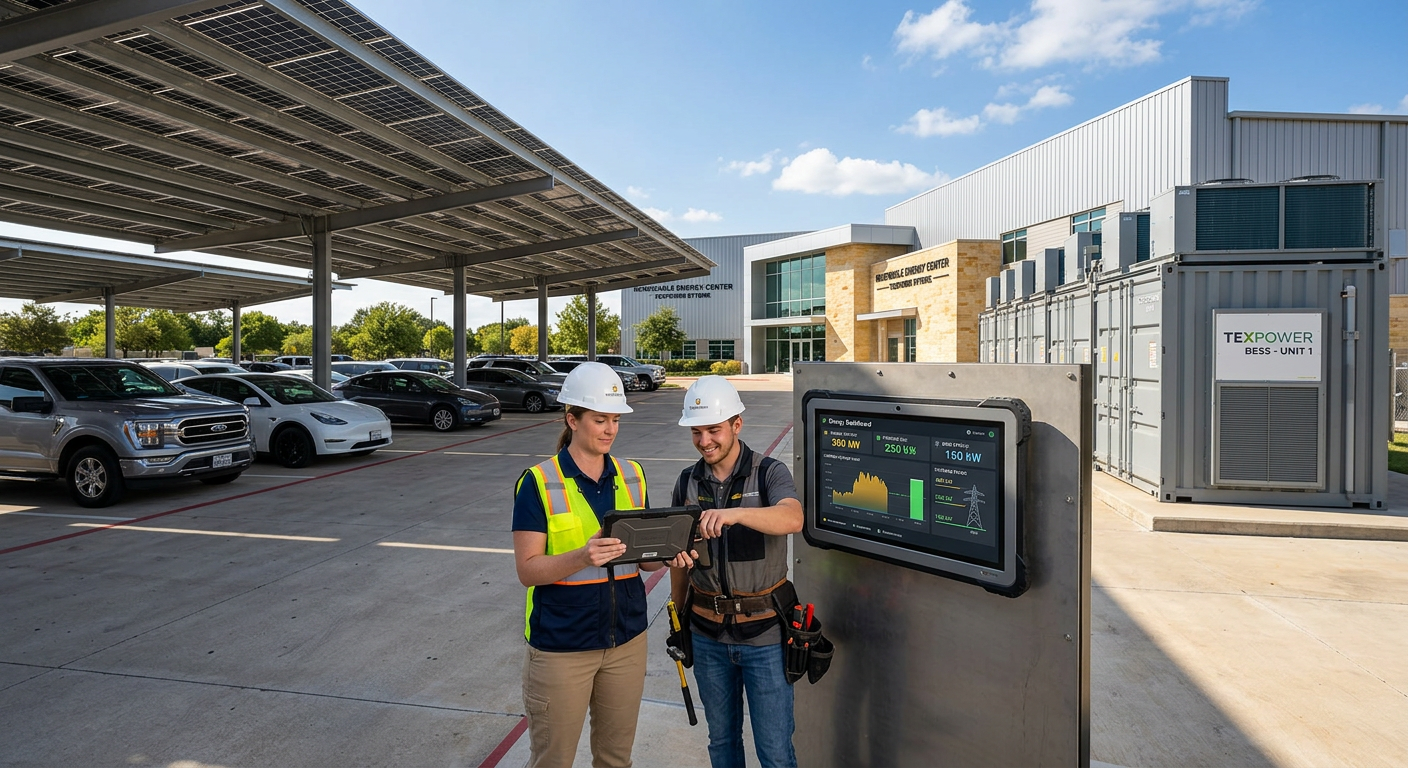
A Better Sales Process for Texas Commercial Projects
A dealer does not need to act as a tax attorney or utility analyst. The strongest partner does three things well: identifies opportunity, sets accurate expectations, and brings the right specialists into the deal.
Lead With the Site’s Business Problem
Start with the customer’s operational concern. It may be rising energy expenses, volatile peak demand, a resilience need, a large roof with little strategic value, or a mandate to reduce operating emissions. This keeps the discussion focused on business outcomes rather than equipment alone.
Explain Incentives With Appropriate Guardrails
Describe the federal credit and Texas property-tax treatment as items to verify, not guaranteed discounts. Put key assumptions in writing, including expected production, ownership model, interconnection path, export treatment, and target construction schedule.
Protect the Client Relationship After Installation
Commercial customers remember whether the system performs, whether the project team communicates, and whether there is a clear path for service. Choosing an installer with proven support systems helps dealers build repeat business and referrals instead of handling avoidable post-install problems.
Become a Solar Dealer With Independent Solar
For sales professionals and channel partners who want to represent commercial-grade solar, battery storage, and long-term energy solutions, we offer a dealer path built around transparent support and professional project delivery. Apply to become a solar dealer and explore how we help partners bring stronger opportunities to business clients across Texas, Arizona, and Nevada.
Your reputation is part of every proposal you present. Review our customer feedback and installation satisfaction, then submit a dealer application when you are ready to build with a reliable installation partner.
Frequently Asked Questions
Can Texas businesses still use a federal incentive for commercial solar?
Potentially, yes, but eligibility depends heavily on project dates and other requirements. Section 48E remains relevant for qualified clean electricity and storage investments, while the July 4, 2026 construction deadline and December 31, 2027 placed-in-service rule create important distinctions for applicable solar facilities.
Does Texas offer a statewide commercial solar rebate?
Texas does not have one universal statewide rebate for all commercial solar installations. Owners should evaluate federal eligibility, local property-tax treatment, utility territory, retail electricity plan, and any local or utility-specific offerings.
Will a commercial solar project receive full retail value for excess production?
Not automatically. Export compensation depends on the site’s utility territory and retail electricity arrangement. A business should model self-consumption first and confirm export terms before relying on any projected credit.
Can battery storage improve the economics of a Texas solar project?
It can, especially for facilities with significant peak demand, resilience needs, or lower-value solar exports. Battery value should be modeled against the site’s interval usage data, demand charges, tariff structure, and operating priorities.
Does the Texas property-tax exemption apply automatically?
No. The Texas Comptroller indicates that an application is generally required through the county appraisal district. Property owners should confirm documentation and filing deadlines with their local district.
What should a dealer avoid saying about solar tax credits?
Dealers should avoid guaranteeing a credit amount, tax treatment, or payback period. A better approach is to explain the available framework, document assumptions, and direct the customer to qualified tax and legal advisors for project-specific conclusions.
Plan for Savings That Hold Up Over Time
The best Texas commercial solar opportunity is not the one with the biggest headline incentive. It is the project that matches the building’s load, handles incentive eligibility responsibly, provides dependable energy savings, and has a clear plan for maintenance and support.
For property owners, that means demanding a transparent financial model. For dealers, it means aligning with an installation partner whose technical discipline and reputation help strengthen every client relationship. When those pieces work together, solar becomes a practical business asset rather than a short-term sales pitch.









 Arizona:
