
Commercial Solar for Multifamily Properties: A Practical Guide

A multifamily property can look energy-efficient on paper and still have stubborn operating costs hiding in common areas, central HVAC equipment, laundry rooms, leasing offices, pumps, and outdoor lighting. For owners and operators, solar is not simply a sustainability upgrade. It can become a long-term asset strategy when the system is matched to the property’s load profile, utility rate structure, roof condition, and resident-benefit plan.
That is why commercial solar for multifamily properties deserves a more disciplined approach than a typical residential installation. We help property decision-makers and dealer partners frame the right questions early, build a credible financial model, and deliver a project that supports lower operating costs, stronger resident value, and dependable performance over time.
What Makes Multifamily Solar Different
Multifamily solar projects sit at the intersection of commercial energy planning and residential operations. The building may have one master meter, many tenant meters, or a mixture of both. That distinction affects where solar savings land, how credits are allocated, and which project model makes the most sense.
A practical project starts with the property’s actual electrical loads. Common-area consumption is often the simplest first target because the owner directly pays those bills. In other cases, virtual billing structures, community solar participation, or a shared-benefit arrangement may help residents participate, subject to local utility rules and program availability.
The opportunity is real. The National Renewable Energy Laboratory highlighted a 124-kilowatt apartment project serving 82 homes in Olympia, Washington, where average resident electricity-bill savings reached 33 percent. Every property has different rates, production, and usage patterns, but the example shows why a well-structured shared solar model can create meaningful value beyond the owner’s meter. National Renewable Energy Laboratory
The Core Project Models
Most multifamily opportunities fall into a few workable paths:
- Common-area offset: Solar serves the meter covering hallways, pool equipment, elevators, office loads, parking-lot lighting, laundry, and central mechanical systems.
- Master-metered building offset: Solar reduces a single building-level bill, which can support operating-margin goals and potentially stabilize expenses.
- Tenant-benefit model: Savings are shared through utility-approved allocation, virtual crediting, community solar, or a carefully designed lease structure.
- Solar plus storage: Batteries can add resilience for selected loads and may help manage peak-demand exposure where the rate design supports it.
The right answer is rarely, “Put as many panels as possible on the roof.” It is, “Build the system that creates the most reliable economic value under this building’s operating conditions.”
Commercial Solar for Multifamily Properties Starts With Better Data
A preliminary proposal should be grounded in at least 12 months of interval utility data whenever possible. Monthly bills are useful, but interval data helps us see when the property uses energy, when demand peaks, and how well solar generation is likely to overlap with expensive consumption.
Review the Roof, Electrical Infrastructure, and Future Plans
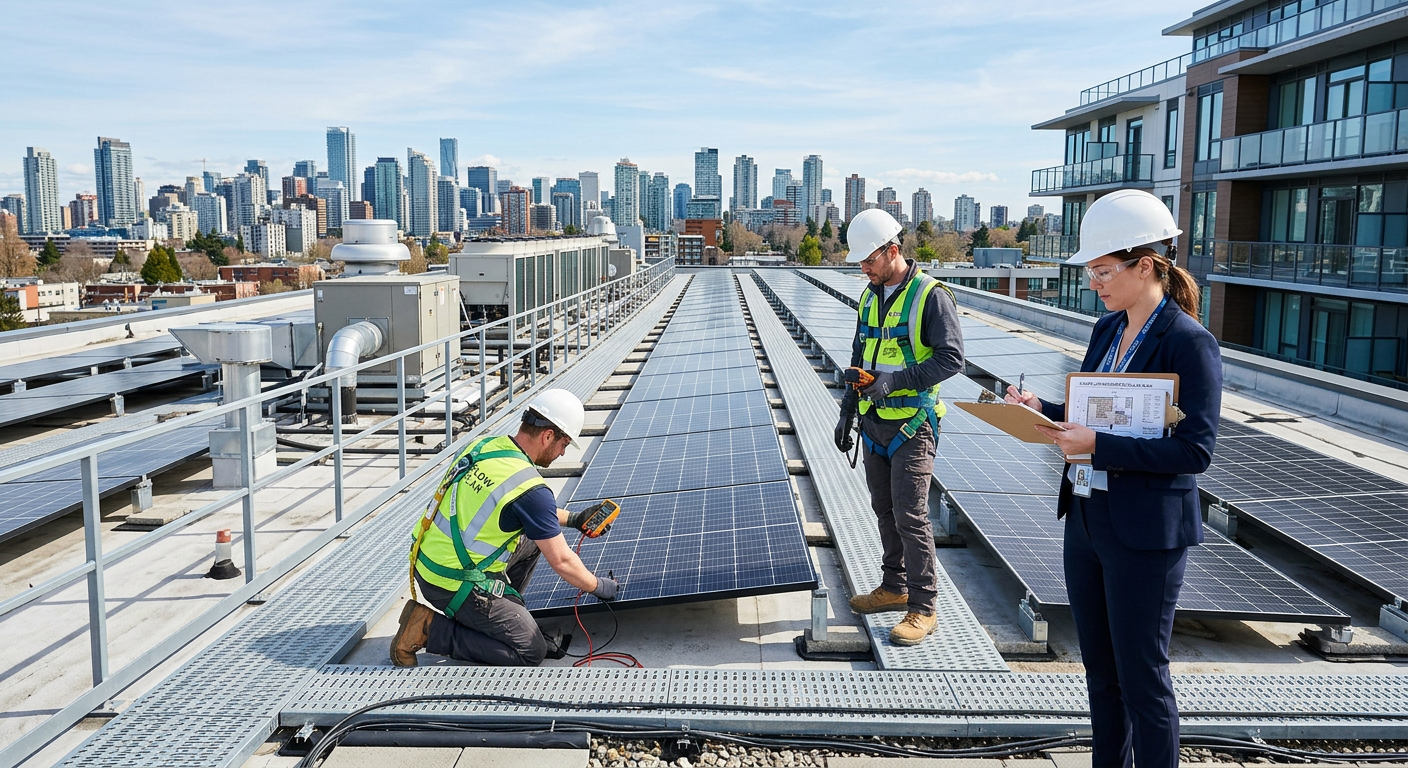
Before discussing panel count, evaluate the roof age, available shade-free area, structural capacity, electrical service, switchgear condition, and interconnection pathway. A roof that will need replacement in a few years can change the best project sequence. Likewise, an electrical upgrade or a planned EV charging expansion may affect system design.
We also recommend reviewing upcoming capital projects. If the property is replacing central cooling equipment, renovating units, adding shaded parking, or improving exterior amenities, solar planning should be coordinated with those decisions. Combining scopes intelligently can reduce disruption and avoid expensive rework later.
Model Savings Conservatively
A dependable financial model separates energy savings from demand-charge savings, utility export value, incentives, financing costs, operations and maintenance, and projected degradation. It should also state assumptions clearly. A proposal that hides uncertainty might look attractive in a sales meeting, but it does not protect an owner’s investment or a dealer’s reputation.
For commercial customers, demand charges can matter as much as energy charges. Lawrence Berkeley National Laboratory notes that rooftop solar can reduce demand charges in some situations, but results vary by tariff design, building load shape, and alignment between solar production and the peak. That is exactly why rate analysis matters before promising a specific outcome. Lawrence Berkeley National Laboratory
Where Battery Storage Adds Value
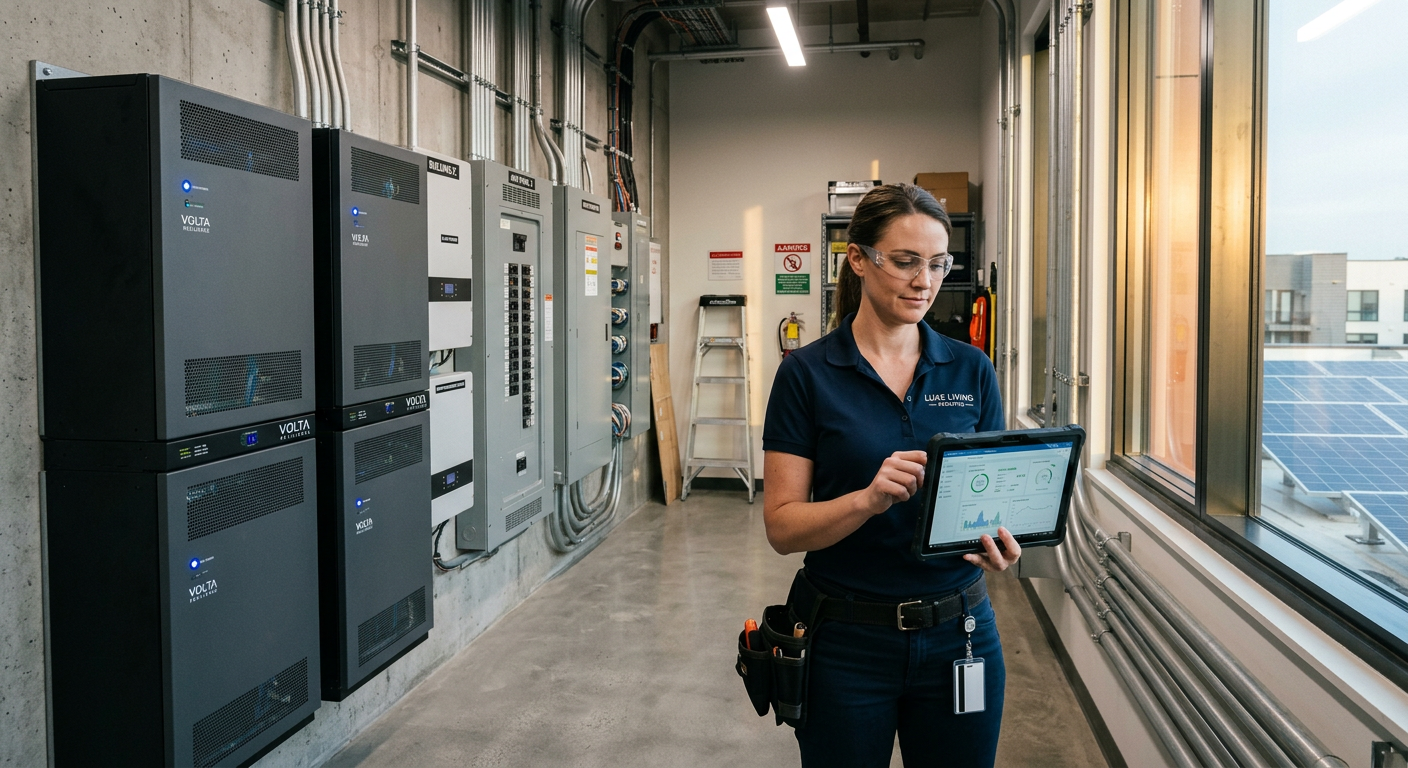
Solar creates energy during daylight hours. Storage gives operators more control over when that energy is used. For multifamily properties, that can matter when the site has a high afternoon or evening peak, critical common-area loads, frequent outage concerns, or a utility tariff that rewards lower peak demand.
Use Batteries for a Defined Job
A battery should not be added just because it sounds advanced. We define its job first, such as supporting peak shaving, backing up leasing and security operations, keeping access controls active, or improving solar self-consumption. Then we size it around the job, available budget, tariff, and critical-load priorities.
For dealer partners, this is an important credibility point. Selling a battery as a universal savings machine can create disappointment. Positioning it as a targeted operational tool, supported by transparent modeling and clear performance expectations, helps protect the client relationship for the long haul.
Incentives and Ownership Structure Need Early Attention
Federal clean-energy incentives can materially affect a project’s economics, but eligibility, credit amount, compliance requirements, ownership structure, and transfer options are fact-specific. The IRS describes the Clean Electricity Investment Credit as generally equal to 6 percent of qualified investment, with a potential 30 percent rate when prevailing wage and apprenticeship requirements are met, subject to applicable rules. IRS Publication 5886
We encourage owners to engage qualified tax and legal advisors before relying on incentive assumptions. The project team should also confirm whether the building owner, a third-party owner, or another entity will hold the asset, because that choice influences cash flow, reporting, risk allocation, and the practical path to capturing available incentives.
Financing Should Match the Hold Strategy
A long-term owner may prefer direct ownership for greater control and asset value. Another owner may prioritize predictable payments through a loan, lease, or power purchase agreement. None of these is automatically best.
The better question is how the financing structure supports the property’s business plan. We help dealer partners and commercial buyers compare ownership economics, contract obligations, escalation assumptions, and the long-term service plan without overselling a single option.
Reputation Is Part of the System Design
A commercial solar project may operate for decades, so the installer relationship cannot end at commissioning. Owners need responsive communication, clear documentation, warranty coordination, monitoring support, and a team that will answer the phone if performance needs attention.
That is also why dealers and sales professionals should evaluate more than equipment brands and commission structure. The installation partner’s field execution and post-install support become part of your reputation. Before aligning with any solar company, review feedback, project experience, and how the team handles real customer questions. You can see Independent Solar customer reviews as part of that due diligence.
A Better Process Protects Everyone
We believe multifamily clients deserve plain-language explanations of production estimates, construction timing, tenant impact, maintenance expectations, and financial assumptions. Dealers benefit from that approach too. When your client sees consistent communication from initial site review through activation, you build trust that leads to referrals and repeat commercial opportunities.
If you want to represent a team focused on commercial-grade execution and transparent support, you can apply to become an Independent Solar dealer. We work with dealer partners who value a professional brand, clear expectations, and solutions they can confidently put in front of property owners.
Common Questions About Multifamily Solar
Can solar benefit tenants as well as the property owner?
Yes, but the delivery method depends on metering, local utility policies, lease terms, and the project model. Common-area offset benefits the owner directly, while community solar, virtual allocation, or approved shared-savings structures may extend benefits to residents.
Is a multifamily property too small for commercial solar?
Not necessarily. Project viability depends more on usable roof or canopy space, annual electricity use, utility rates, structural conditions, and interconnection than on unit count alone. A smaller property with high common-area consumption may be a strong candidate.
Should we repair or replace the roof before installing solar?
If the roof is near the end of its useful life, completing roof work first is often the smarter path. Removing and reinstalling panels later adds cost and operational disruption, so coordinating the two capital projects can protect the investment.
Does battery storage provide backup power for every apartment?
Usually not. Whole-property backup can require a large, costly system. Many commercial battery plans focus on selected critical loads, such as lighting, internet equipment, access controls, security, refrigeration, leasing operations, or designated common areas.
How long does installation take at an occupied property?
Timelines vary with system size, permits, utility interconnection, roof access, equipment lead times, and electrical scope. A good contractor develops a construction plan that minimizes tenant disruption and communicates site activity clearly before work begins.
What should a dealer look for in a commercial solar partner?
Look for accurate site assessment, transparent financial assumptions, disciplined project management, quality installation practices, clear client communication, and ongoing service capability. Strong partnerships make it easier to earn trust on larger, more complex accounts.
Build a Multifamily Solar Opportunity With Confidence
For owners, the goal is not merely adding panels. It is creating an energy asset that fits the property’s operations, capital plan, and resident experience. For sales professionals, that means choosing an installation partner whose quality and communication make you more credible with every client conversation.
We support dealer partners with commercial-grade solar design, battery storage options, project guidance, and long-term service-minded execution across Arizona, Nevada, and Texas. Ready to bring a stronger solution to your commercial pipeline? Become a dealer with Independent Solar and start building opportunities you can represent with confidence.
The Long-Term Takeaway
The best multifamily solar projects are built around real building data, clear benefit allocation, sound financing, and a service plan that lasts beyond installation day. When owners, operators, dealers, and installers align early, solar can reduce operating exposure while strengthening the property’s appeal and resilience.
A thoughtful project does more than produce electricity. It creates a more predictable energy strategy, a better client experience, and a partnership worth keeping.





 Arizona: