
Reliable Solar Partner Program for Commercial Dealer Growth Teams
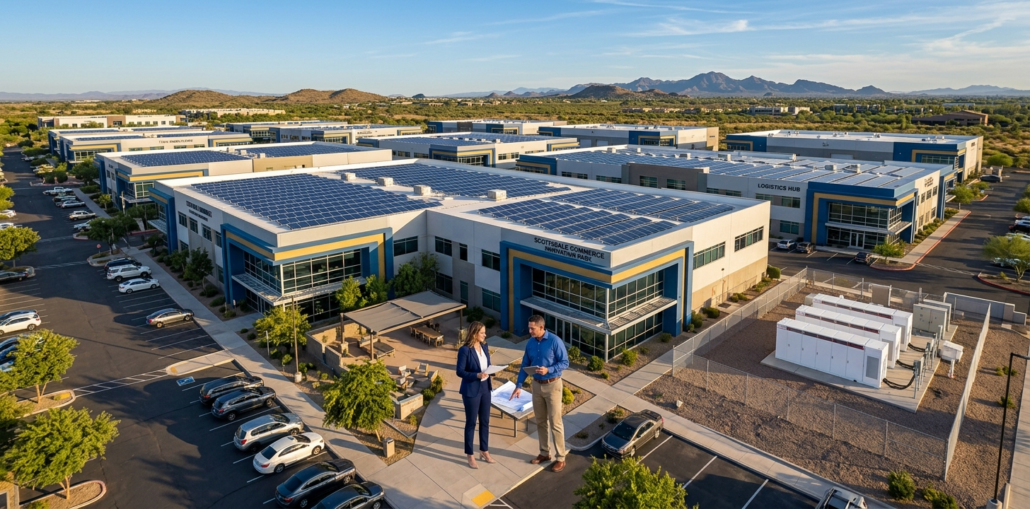
The best channel partnerships do more than help close a project. They protect the relationship a sales representative has worked hard to build, especially when a commercial customer asks difficult questions about production, permitting, financing, service, and long-term system performance.
A reliable solar partner program gives dealers a credible delivery team behind every promise. For B2B sales professionals and commercial property owners across Arizona, Nevada, and Texas, that means pairing a strong opportunity with disciplined project execution, transparent communication, and support that lasts after commissioning.
Reliability Is a Sales Advantage, Not a Back-Office Detail
Commercial buyers are not simply purchasing panels. They are evaluating operating costs, utility exposure, capital allocation, tenant needs, resilience, and the risk of choosing the wrong contractor. A dealer partnership becomes valuable when it helps translate those concerns into a practical energy plan.
The solar market continues to create meaningful commercial conversations. The Solar Energy Industries Association's 2025 Year in Review reports that solar remained the leading source of new U.S. generating capacity in 2025. Growth alone does not make every project a fit, but it does reinforce why businesses are taking on-site generation, storage, and energy-cost management more seriously.
For us, a dependable partnership starts with honest qualification. We would rather identify a poor site fit early than make aggressive savings claims that cannot survive utility analysis, engineering review, or a customer’s financial scrutiny.
What Dealers Need From an Installer Partner
A sales partnership should create confidence at every handoff. Dealers should know who owns the next step, what documentation the prospect will receive, how changes are handled, and who remains accountable after the installation is energized.
A reliable commercial solar installer should provide:
- Clear scopes of work, equipment assumptions, and proposal inputs
- Engineering, permitting, procurement, and construction coordination
- A defined process for utility interconnection and inspections
- Realistic production modeling tied to site conditions and utility rates
- Warranty, monitoring, maintenance, and repair pathways after installation
- Straightforward commission terms and project-status communication
When these pieces are missing, the dealer carries the reputational risk. When they are clear, the sales representative can stay focused on prospecting, discovery, and building a durable book of business.
How Commercial Solar and Storage Create a Stronger Client Case
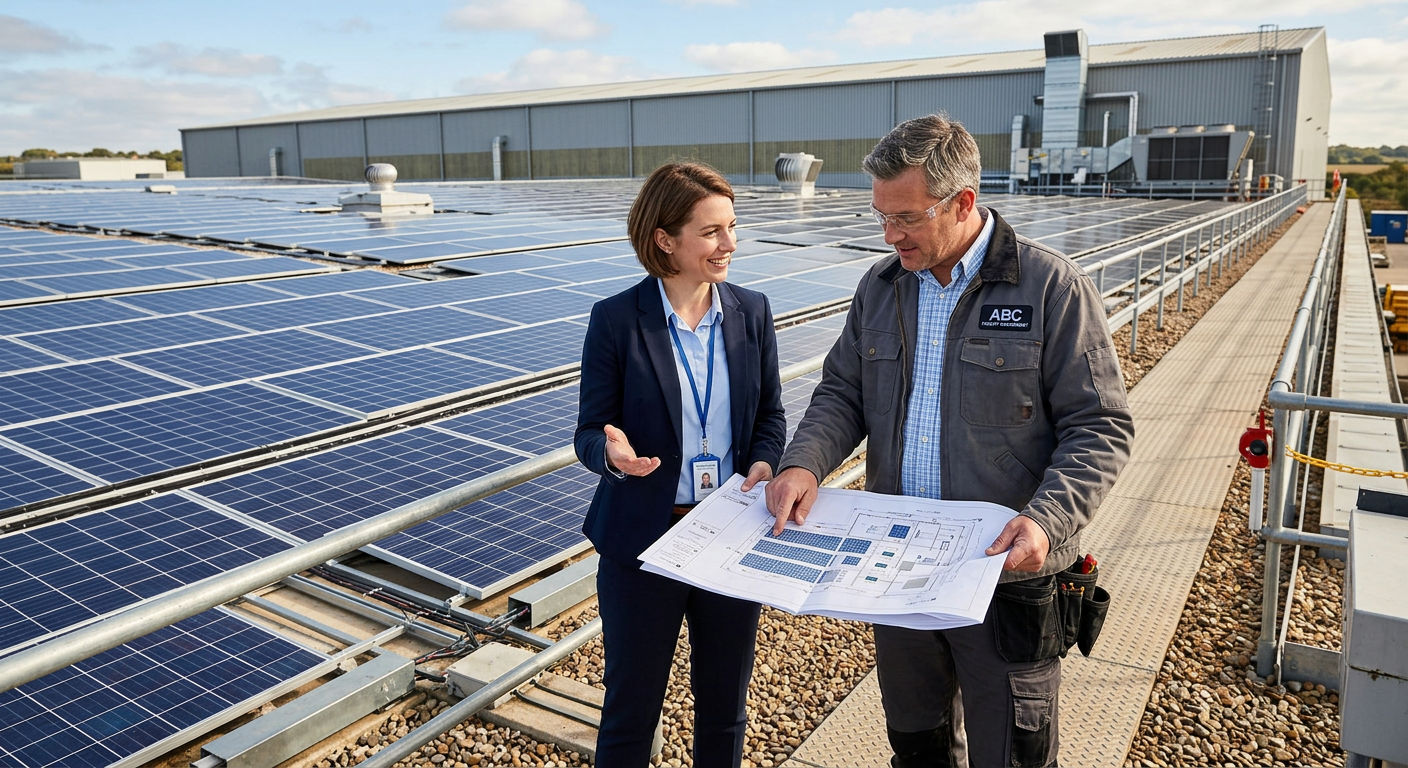
Commercial solar is most compelling when it addresses the financial realities of a specific property. Retail centers, offices, hospitality sites, multifamily communities, schools, churches, HOAs, and light industrial facilities can each have different load profiles, ownership structures, and utility tariffs.
Start With Utility Savings, Then Test the Economics
We encourage dealers to begin with interval usage data and utility bills, not a generic system size. The highest-value opportunities may involve offsetting daytime consumption, reducing demand charges, improving budget visibility, or supporting critical loads.
A credible ROI discussion considers more than panel output. It should include the customer’s tariff structure, expected rate escalation, shading, roof condition, insurance requirements, financing costs, maintenance expectations, and the value of available incentives. The result is a proposal that business decision-makers can take seriously.
Federal clean-energy incentives may affect project economics, but eligibility and requirements are technical and can change. The IRS guide to the Clean Electricity Investment Credit identifies qualifying solar and energy-storage technologies under Section 48E. We recommend that commercial customers review project-specific tax questions with qualified tax counsel, while our team helps dealers frame the technical and documentation questions early.
Battery Storage Adds More Than Backup Power
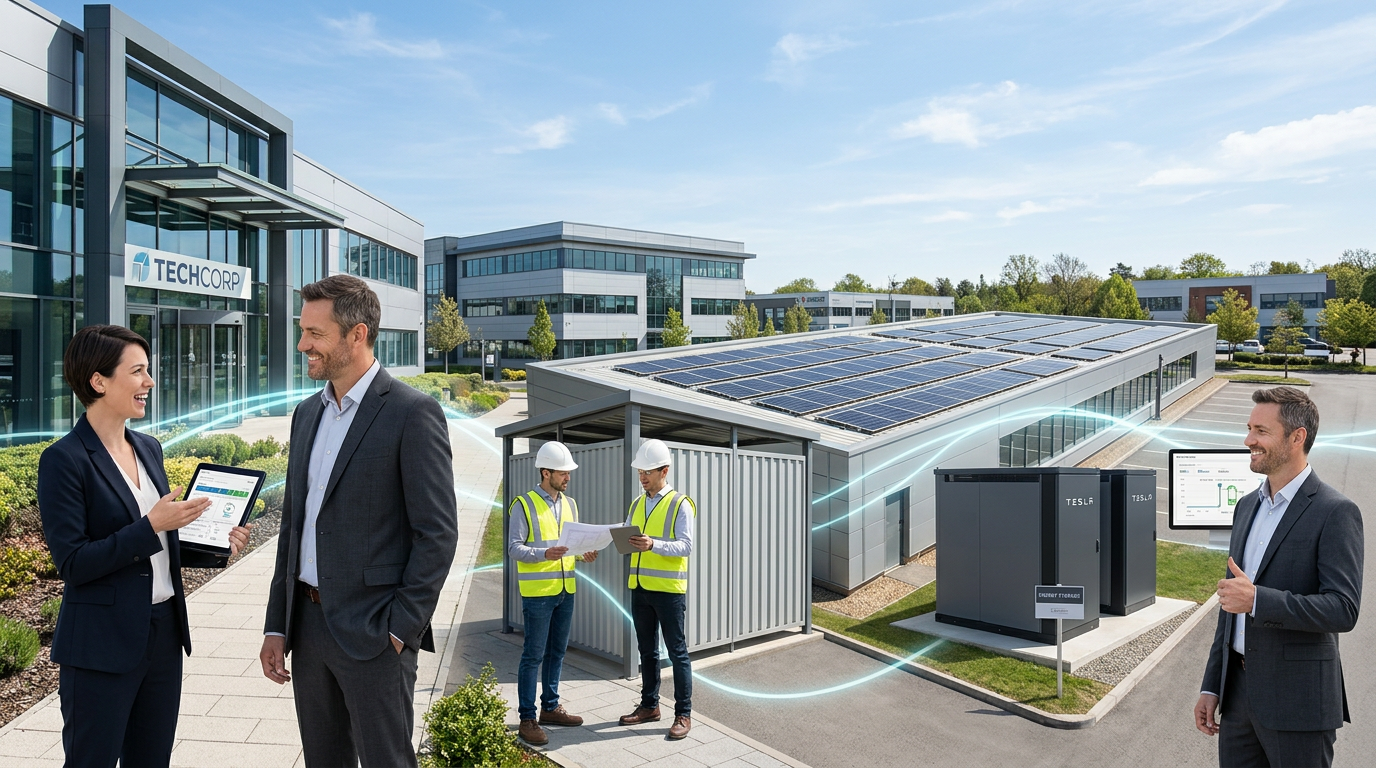
Battery storage for business can support a broader value proposition. Depending on the facility and local utility structure, storage may help reduce peak demand, shift solar energy to higher-value periods, maintain selected critical loads, and improve operational resilience.
That is why storage should not be treated as a generic add-on. System sizing, dispatch strategy, safety requirements, interconnection rules, and the customer’s actual operating priorities all matter. The SEIA energy storage resource center explains that battery energy storage systems can distribute stored energy to the grid, homes, or businesses, helping support reliability and lower energy costs.
For dealer partners, the practical benefit is a more complete commercial conversation. Rather than selling a single product, you can help clients evaluate a coordinated solar-plus-storage strategy designed around their facility.
A Practical Framework for Vetting a Solar Sales Partnership
Before representing any installer, dealers should conduct the same due diligence their clients will eventually conduct. Reputation cannot be borrowed casually. It is earned through repeatable systems, documented work, and responsible service.
| Evaluation Area | What to Verify | Why It Matters |
|---|---|---|
| Commercial experience | Similar sites and project scope | Reduces execution risk |
| Proposal discipline | Usage-based modeling and clear assumptions | Builds ROI credibility |
| Service model | Monitoring, maintenance, warranty process | Protects the client relationship |
| Dealer support | Training, technical help, commission clarity | Makes selling more efficient |
| Reputation | Recent feedback and references | Provides social proof |
Review the Quality of Communication
Slow answers and vague ownership are warning signs. Commercial projects involve property managers, financiers, utilities, engineers, inspectors, and business stakeholders. A partner should have a clear communication cadence, documented milestones, and a direct path for resolving questions.
This is particularly important for sales reps. Every unanswered client question can weaken trust in the rep who made the introduction. Strong communication protects the customer experience and preserves future referral opportunities.
Look Beyond the Installation Date
A system can look excellent on completion day and still create problems if monitoring, maintenance, warranty coordination, and repair response are unclear. Ask who handles post-install support, what the escalation process looks like, and how performance concerns are documented.
Long-term reliability is also why public feedback matters. Before you attach your name to a provider, review its customer feedback and installation satisfaction to see whether the company makes its reputation visible. Honest reviews help dealers establish trust early and give commercial buyers another reason to move forward with confidence.
Confirm That the Program Supports Your Growth
A dealer program should remove friction, not add it. Good onboarding helps representatives understand ideal customer profiles, sales materials, project stages, technology options, and expectations around commissions.
Independent Solar supports dealer partners with commercial-grade installation capabilities, battery storage options, technical coordination, and long-term service planning. If you want to evaluate whether our model aligns with your market and sales approach, you can apply to become a solar dealer and start a direct conversation about fit.
Why Social Proof Has a Direct Impact on Dealer Success
Commercial prospects expect proof. They may ask for comparable projects, equipment details, savings assumptions, licenses, warranty information, and customer experiences. A dealer who can provide those materials promptly enters the conversation with more authority.
Reviews are especially useful because they show how a company performs when the project becomes real. Strong feedback can validate responsiveness, workmanship, professionalism, and follow-through. Negative patterns, on the other hand, can reveal service gaps before they become your problem.
We believe reputation improvement is an ongoing operating responsibility. That means listening to customers, addressing concerns directly, documenting processes, and making feedback easy to find. Dealers can use our reviews and social proof resources to support client conversations without relying on vague claims.
Build a More Credible Commercial Solar Pipeline
Transparent commissions. Strong support. Commercial-grade installs. Real opportunity.
If you are building a solar sales business and want an installer partner that helps protect your reputation, apply to join Independent Solar's dealer program. We work with dealers, sales representatives, and channel partners who want to bring professionally structured solar and storage solutions to commercial clients.
For prospects evaluating solar economics, it can also help to share resources on commercial solar solutions and battery storage for business. Better-informed buyers make stronger long-term customers.
Frequently Asked Questions
What makes a solar partner program reliable?
Reliability comes from consistent execution across sales support, engineering, permitting, installation, commissioning, monitoring, service, and communication. Dealers should also look for clear commission expectations and a documented path for resolving client issues.
Can a dealer sell commercial solar without being a technical expert?
Yes, provided the installer partner offers accessible technical support and disciplined proposal development. Dealers still need to understand the customer’s goals, bills, facility operations, and decision process, but engineering teams should validate technical assumptions.
Which commercial properties are good candidates for solar?
Properties with substantial daytime energy use, usable roof or land area, stable ownership, and long-term occupancy are often strong candidates. Retail, office, hospitality, multifamily, education, nonprofit, and light industrial properties can all be viable when utility economics and site conditions align.
How does battery storage affect commercial solar ROI?
Storage can improve value when a business faces high demand charges, time-based rates, outage exposure, or a need to use solar energy beyond daylight hours. Its ROI depends on interval data, tariff rules, operational priorities, system design, and available incentives.
Why should sales reps check solar installer reviews?
Reviews give reps a practical view of customer experience, including communication, workmanship, and post-install support. This protects the rep’s personal brand and provides useful social proof during commercial sales conversations.
How do I become a solar dealer with Independent Solar?
We invite qualified dealers and sales professionals to submit a dealer application. We can then discuss your markets, commercial focus, onboarding needs, and the support structure required to serve clients professionally.
The Strongest Partnerships Protect Everyone’s Reputation
A reliable solar partner program is not defined by a sales pitch. It is defined by what happens after the customer says yes: accurate engineering, clear communication, quality installation, realistic economics, and service that supports the system over time.
For dealers, that consistency creates repeat business and referrals. For commercial property owners, it creates a clearer path to utility savings, operational resilience, and an energy investment that can stand up to serious financial review.







 Arizona:
