
Solar Tax Credit for Commercial Property: Business Guide 2026
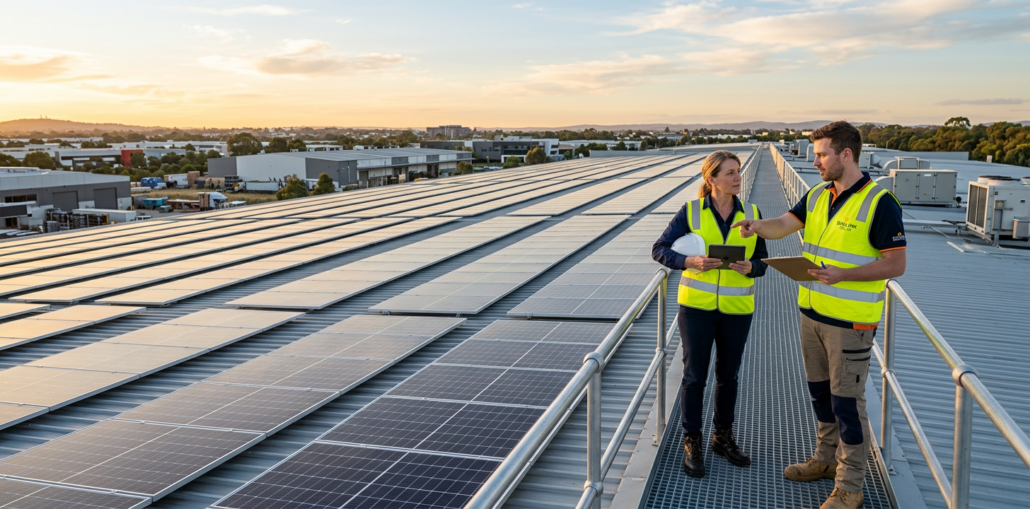
Commercial solar is no longer only a conversation about electricity rates. For property owners, CFOs, and sales partners, it is a capital-planning decision that combines utility savings, tax strategy, asset value, and long-term operating resilience.
The solar tax credit for commercial property can still materially improve a project’s economics, but the rules changed for many solar facilities placed in service after 2024. In 2026, careful project timing, construction documentation, labor compliance, equipment sourcing, and tax coordination matter as much as choosing the right panels.
For commercial projects, the strongest outcome comes from looking beyond the headline credit. We evaluate load profiles, demand charges, roof or land conditions, battery-storage opportunities, utility requirements, financing structure, and the installation team’s ability to support the system after commissioning.
The Commercial Solar Tax Credit at a Glance
| Planning area | What it can affect | Why it matters |
|---|---|---|
| Base credit rate | Project tax benefit | May begin at 6% |
| Labor compliance | Higher credit rate | Can increase the rate to 30% |
| Construction timing | Credit eligibility | Solar deadlines are important |
| Equipment sourcing | Eligibility and bonuses | Documentation is increasingly important |
| Battery storage | Project scope and savings | Can improve peak-demand control |
The federal incentive generally relevant to new commercial solar and qualifying storage is the Clean Electricity Investment Tax Credit under Section 48E. The IRS explains that the standard credit amount is 6% of qualified investment, while projects that meet prevailing wage and apprenticeship requirements can receive a 30% rate. IRS Publication 5886 provides a useful high-level summary for business taxpayers.
That difference is significant. On a $1 million eligible project basis, a 6% credit is $60,000, while a 30% credit is $300,000. Actual eligible basis, tax appetite, depreciation treatment, financing, and project facts must be reviewed with qualified tax and legal advisers.
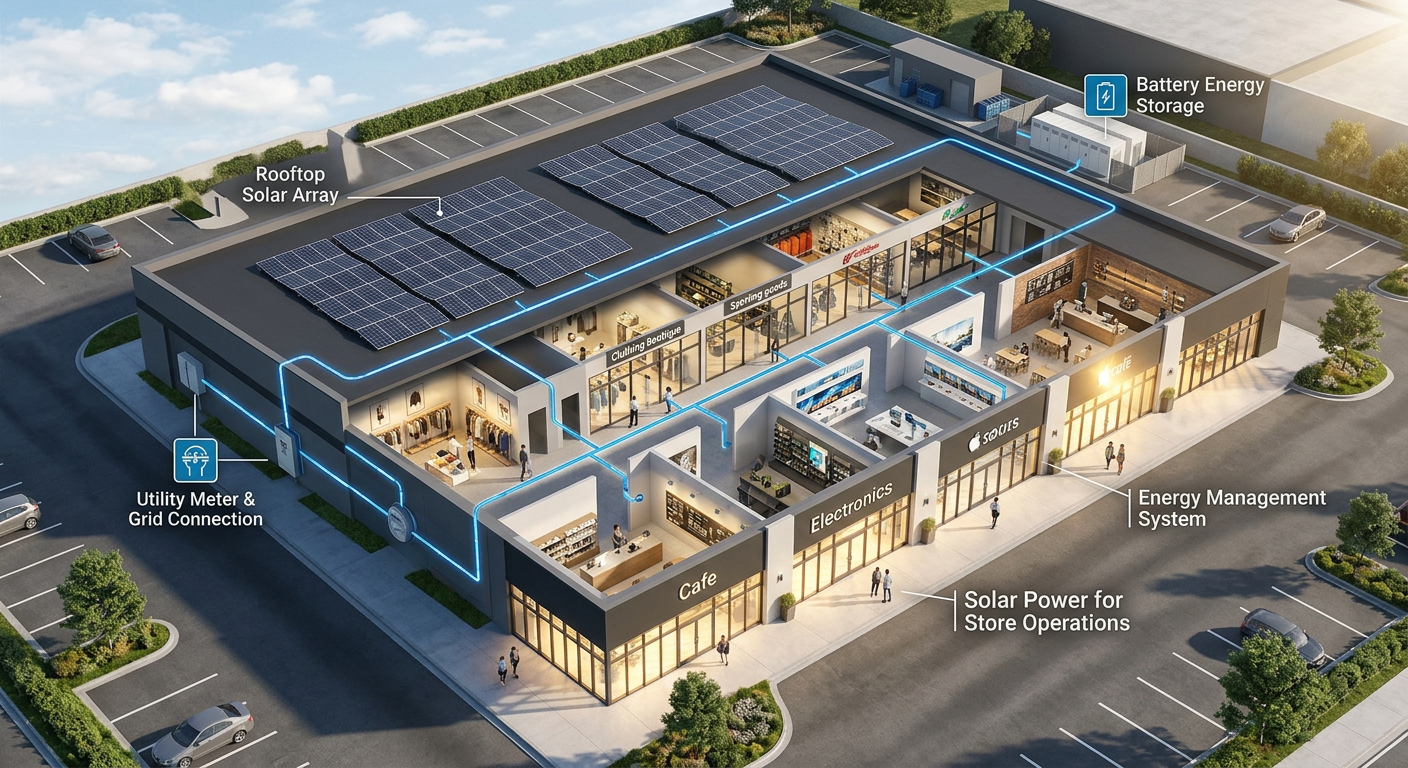
How the Solar Tax Credit for Commercial Property Works
A tax credit reduces federal income tax liability dollar for dollar, subject to applicable rules. It is not the same as a deduction, and it should not be treated as an automatic discount applied by an installer at contract signing.
For most for-profit commercial owners, the underlying idea is straightforward: eligible project costs create a credit after the facility is placed in service and the taxpayer completes the required filings. However, the correct credit pathway depends on ownership, project timing, equipment, facility type, and compliance details.
The Shift From Section 48 to Section 48E
For facilities placed in service on or after January 1, 2025, Section 48E replaced the former Section 48 investment tax credit framework for qualifying clean electricity facilities and energy storage technology. The IRS notes that Section 48E applies to qualified facilities and storage placed in service after 2024. IRS Form 3468 Instructions outlines the filing framework and applicable credit calculations.
For business leaders, the practical takeaway is simple. Do not reuse an old proposal deck or tax estimate without confirming the current rules. A commercial solar project should be modeled using the current credit structure and the precise construction timeline.
Why Prevailing Wage and Apprenticeship Matter
The 30% rate is tied to prevailing wage and apprenticeship requirements for projects above the applicable size threshold. Those requirements influence bid strategy, payroll records, contractor coordination, and ongoing compliance.
This is not a paperwork detail to address after installation. It belongs in the scope of work, subcontractor agreements, payroll process, and project file from the beginning. A lower-cost installation approach can become expensive if its documentation does not support the intended tax-credit position.
Potential Bonus Credit Opportunities
Certain projects may qualify for bonus credit amounts, including domestic content, energy community, or low-income community pathways. These are not automatic and have separate requirements.
For example, the IRS states that qualifying facilities under the low-income communities program may receive a 10 or 20 percentage-point increase, subject to an allocation process and eligibility requirements. IRS guidance for the Clean Electricity Low-Income Communities Bonus Credit explains the categories and process.
The 2026 Timing Rule Commercial Owners Cannot Ignore
Timing is a major issue for commercial solar in 2026. Federal guidance tied to the One Big Beautiful Bill Act established a critical rule for applicable solar facilities: projects that begin construction after July 4, 2026 and are placed in service after December 31, 2027 may not qualify for the Section 48E credit.
The IRS guidance specifies that, for the relevant deadline, a taxpayer generally must establish beginning of construction through physical work of a significant nature before July 5, 2026, while also satisfying continuity requirements. IRS Notice 2025-42 provides the detailed standard.
Because it is now September 2026, property owners and partners should not assume that signing a contract, making a deposit, ordering equipment, or issuing a notice to proceed creates eligibility. Those actions may matter commercially, but the tax analysis is fact-specific. Projects that missed the applicable construction threshold need a fresh feasibility review rather than an outdated promise of a 30% credit.
Battery Storage Has a Different Strategic Role
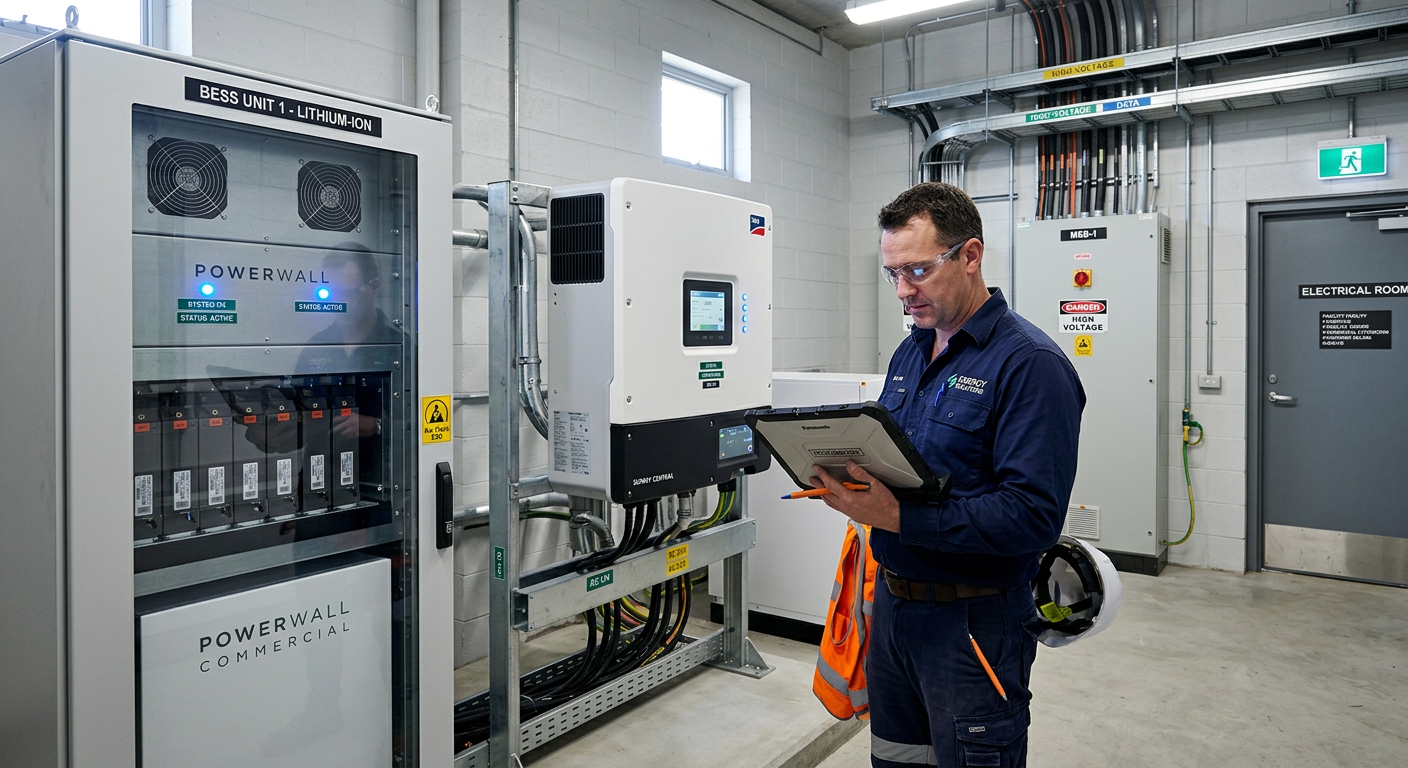
Battery storage can be eligible under Section 48E, and it can add practical value even when a property’s solar timeline is complicated. For many businesses, storage is evaluated for demand-charge management, peak shaving, backup power, time-based rate optimization, and greater control over on-site solar production.
A warehouse, cold-storage facility, hotel, school, multifamily property, or light-industrial operation may benefit from a battery if its utility bill includes steep peaks or critical-load concerns. Explore commercial battery storage options as part of a complete energy strategy, rather than treating storage as an afterthought.
Build the ROI Model Around More Than the Credit
A credible commercial solar model should show where the savings come from and what assumptions drive them. The tax credit may reduce the effective cost, but operating savings and system performance determine the long-term result.
Start With Utility Data and Load Shape
We recommend reviewing at least 12 months of interval data when available, along with tariff schedules, demand charges, seasonal peaks, operating hours, planned facility changes, and utility interconnection limits. A system that looks good on annual consumption alone may underperform expectations if it does not align with when the business uses power.
For retail centers, offices, hospitality, schools, churches, HOAs, and multifamily properties, daytime use may match solar production well. Light-industrial and refrigerated operations may also benefit, but their demand profile can make storage and controls especially important.
Include Depreciation and Financing Carefully
Commercial solar economics can involve accelerated depreciation, debt financing, leases, power purchase agreements, and tax-credit transfer structures. Each structure changes who claims the credit, who receives depreciation value, how risk is allocated, and what the owner pays over time.
No one financing model is best for every building. An owner with tax liability may prioritize direct ownership. A nonprofit, church, school, or governmental entity may need to evaluate elective pay rules instead. A property owner with limited tax appetite may consider a third-party ownership structure or transferability, subject to current legal and tax guidance.
Compare Solar Against the Cost of Doing Nothing
The appropriate comparison is not simply solar versus the utility bill from last month. It is solar and storage versus projected utility costs, demand exposure, maintenance expectations, roof lifecycle planning, financing costs, and the operational value of more predictable energy expenses.
That is why commercial installation quality matters. Structural review, electrical design, permitting, utility coordination, commissioning, monitoring, and service capacity protect the return that looks attractive in a spreadsheet. Learn more about commercial solar project planning before using a preliminary proposal as a final investment decision.
What Dealers and Sales Partners Should Bring to Every Commercial Conversation
A strong solar sales partnership is built on clarity, not inflated savings claims. Dealers and sales representatives create more durable client relationships when they set expectations around tax advice, construction schedules, credit eligibility, utility approvals, and long-term service.
Independent Solar supports dealer partners with commercial-grade project capability, transparent communication, and a process that helps reps represent the project with confidence. For partners who want to align with an installer built for long-term relationships, apply to become a solar dealer and begin the conversation.
Use a Tax Credit Checklist, Not a One-Line Promise
When speaking with a commercial prospect, we recommend documenting these items early:
- Legal owner of the property and intended project owner
- Federal tax appetite and the client’s tax-adviser involvement
- Anticipated construction milestones and placed-in-service date
- Prevailing wage and apprenticeship plan
- Equipment specifications and supplier documentation
- Utility tariff, demand-charge exposure, and interconnection status
- Roof condition, structural findings, and future building plans
- Battery-storage case, including resilience and demand management
This approach does more than protect the project. It protects the partner’s reputation. Clients remember whether a sales professional was precise, realistic, and responsive when the project became complex.
Trust Is Part of Commercial Project Economics
Commercial buyers are evaluating the installer behind the proposal as closely as the equipment and incentive estimate. They want to know who will answer when the utility requests a change, when a monitoring alert appears, or when a warranty question arises years after installation.
Social proof helps validate that decision. We encourage prospects and partners to review customer feedback and installation experiences as part of their due diligence. Reputation improves when project expectations are documented, communication stays transparent, and service continues after the system goes live.
Common Mistakes That Reduce Commercial Solar Value
Treating the Credit as Guaranteed
Eligibility is determined by law and project facts, not marketing language. Businesses should involve a tax professional early and make sure the project team can supply organized records.
Waiting Until Design Is Finished to Discuss Compliance
Labor requirements, sourcing considerations, and construction timing can influence project scope and procurement. They should be addressed before final pricing and contract execution.
Ignoring Demand Charges
A solar array can lower kilowatt-hour consumption, but it may not fully address costly peaks. A battery, controls strategy, or a different system size may produce a stronger result.
Choosing an Installer Only on Price
The lowest proposal may omit monitoring, service capacity, structural diligence, code considerations, equipment quality, or proactive utility coordination. For a commercial asset expected to operate for decades, these omissions can erase apparent upfront savings.
Questions Commercial Property Owners Ask
Can every commercial property claim a 30% solar tax credit?
No. The 30% rate generally depends on meeting prevailing wage and apprenticeship requirements, along with all other applicable eligibility rules. Project timing and compliance records are essential.
Is the commercial solar tax credit still available in 2026?
Some projects may remain eligible, but timing rules are crucial. Applicable solar facilities that began construction after July 4, 2026 and are placed in service after December 31, 2027 face a termination rule under current federal guidance. A tax adviser should review the facts of each project.
Can commercial battery storage qualify for a federal tax credit?
Qualifying energy storage technology may be eligible under Section 48E. Storage should be evaluated for both its tax treatment and its ability to reduce demand charges, manage peaks, and support critical loads.
Does a signed contract mean construction has begun for tax-credit purposes?
Not necessarily. The IRS guidance uses specific tests and documentation standards. A signed agreement, deposit, or equipment order alone should not be assumed to establish beginning of construction.
Can a church, school, or nonprofit benefit from commercial solar incentives?
Potentially. Tax-exempt and governmental entities may have access to elective pay for certain qualifying credits. Their ownership structure and filing process differ from those of taxable businesses.
Should sales reps provide tax advice to commercial clients?
No. Sales reps can explain the general project framework and encourage early coordination with a qualified tax adviser. They should avoid guaranteeing a specific tax outcome.
Build a Commercial Solar Plan Clients Can Defend
A smart commercial solar decision brings engineering, finance, tax planning, utility analysis, and service accountability into one conversation. The tax credit can be valuable, but its real benefit comes from a project designed correctly, documented carefully, and supported for the long term.
For business owners, that means asking better questions before signing. For solar dealers and sales partners, it means representing an installation team that values accuracy, responsiveness, and outcomes that hold up after the sale.
Partner With a Commercial-Ready Solar Team
We help dealer partners bring credible commercial solar, battery storage, and long-term energy solutions to clients across Arizona, Nevada, and Texas. Our focus is transparent support, professional installation standards, and a reputation you can confidently put behind your name.
Become a Solar Dealer With Independent Solar
Transparent commissions. Strong support. Commercial-grade installs. Real opportunity. Apply to become a dealer with Independent Solar and build a sales partnership designed for durable growth. You can also start your dealer application here when you are ready to discuss your market and commercial pipeline.
Proof You Can Trust
See real customer feedback and installation satisfaction through our Independent Solar reviews. A strong reputation is built one well-supported project at a time.






 Arizona:
