
How to Become a Solar Sales Partner With Commercial Solar Support
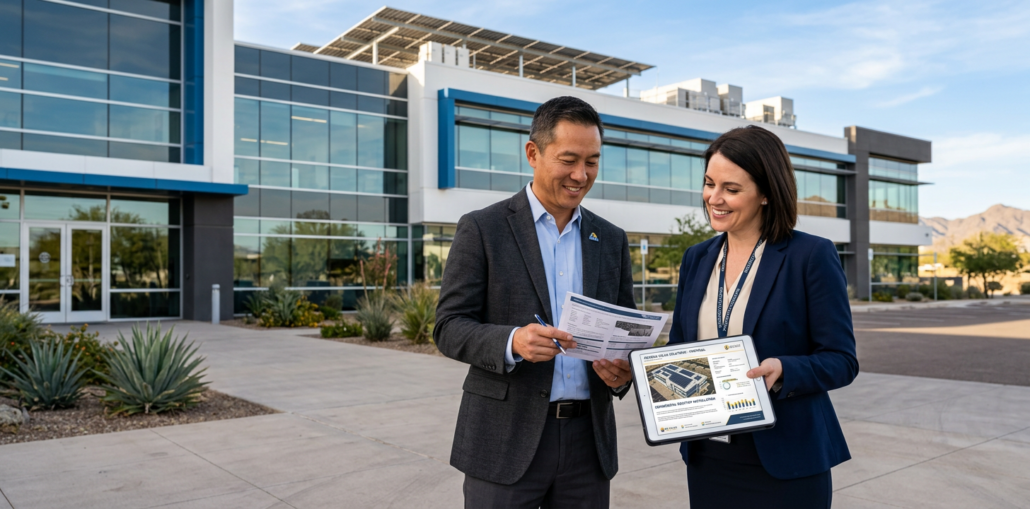
The best sales partnerships are not built on the highest commission promise. They are built on the confidence that comes from knowing your installation partner can deliver for your client after the contract is signed.
For sales reps, channel partners, and B2B advisors serving commercial property owners, how to become a solar sales partner starts with a practical question: can we represent this company without putting our reputation at risk? A strong partner gives us technical depth, clear project communication, long-term service support, and a credible story around utility savings, solar financing, and battery storage.
The opportunity is substantial. The U.S. solar industry installed 43.2 gigawatts of capacity in 2025, according to the Solar Energy Industries Association's 2025 Year in Review. Commercial buyers are looking beyond panels alone, asking informed questions about operating costs, demand charges, energy resilience, and the long-term value of their properties. (seia.org)
What A Solar Sales Partner Actually Does
A solar sales partner creates qualified opportunities, guides prospects through the buying decision, and stays accountable for a professional customer experience. We do not need to be electricians or project engineers, but we do need enough command of the process to qualify projects accurately and communicate value clearly.
For commercial solar, that often means working with decision-makers who care about more than the first-year utility bill. Retail centers, offices, hospitality properties, multifamily communities, schools, churches, HOAs, and light industrial facilities may evaluate solar through several lenses:
| Buyer priority | What we need to explain | Strong partner support |
|---|---|---|
| Operating costs | Utility savings and rate exposure | Usage analysis and system design |
| Investment value | Payback, financing, and asset value | Accurate proposals and financial guidance |
| Business continuity | Backup power and peak-demand strategy | Battery storage expertise |
| Risk management | Permits, warranties, and service | Clear project coordination |
A capable installer should take ownership of design, permitting, interconnection, construction, and post-install support. Our responsibility is to set realistic expectations, keep stakeholders informed, and connect the buyer to the right technical resources at the right stage.
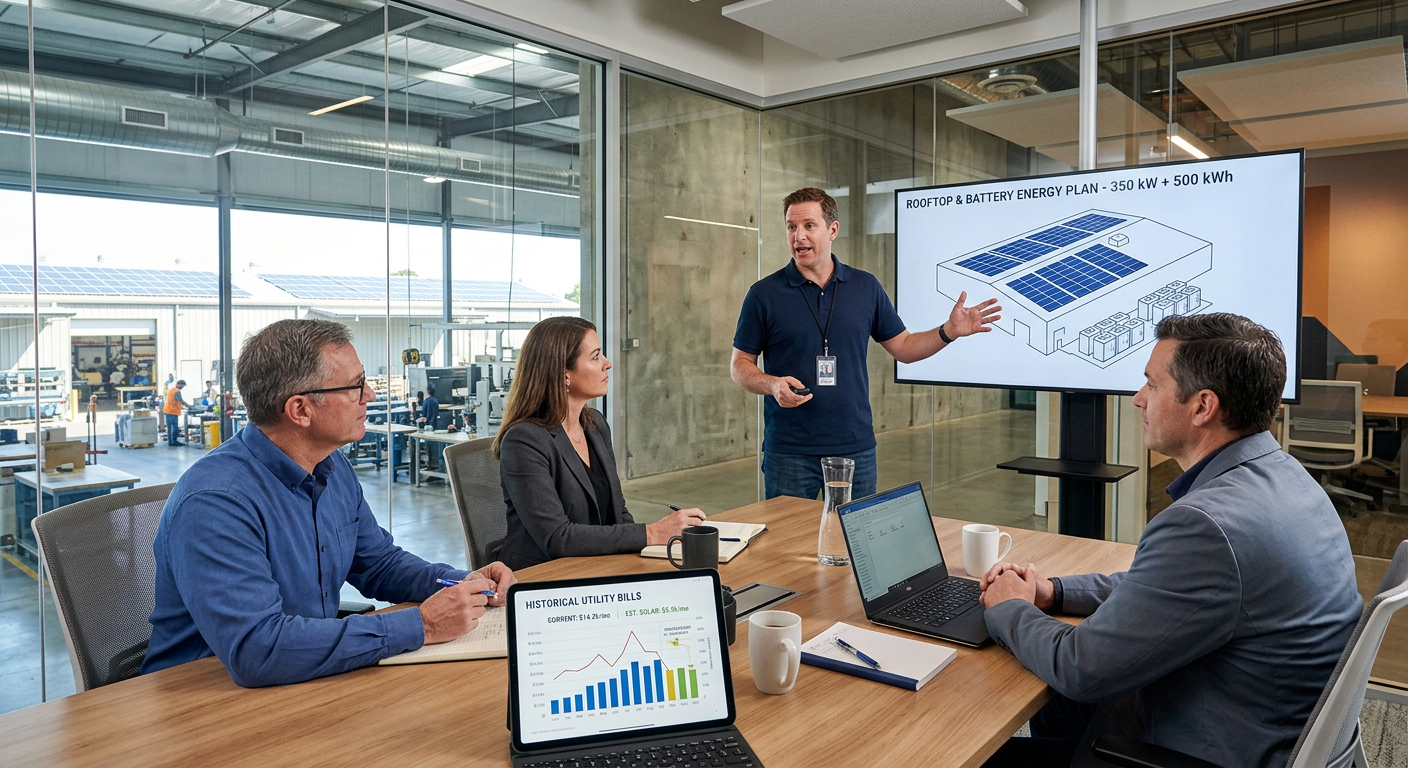
How To Become A Solar Sales Partner In Five Steps
Build A Commercial-Ready Sales Foundation
Prior solar experience can help, but it is not the only path in. Strong prospects often bring B2B sales discipline, property relationships, finance knowledge, construction awareness, or experience serving facility managers and business owners.
We should be prepared to discuss electricity usage, roof or land availability, ownership structure, project timelines, and the buyer's goals. Listening matters as much as presenting. A warehouse concerned about demand charges may need a very different conversation than a church focused on budget stability or a multifamily owner planning a capital improvement.
Choose An Installer That Protects Your Reputation
The difference between a loose referral arrangement and a durable solar sales partnership is what happens after a lead becomes a signed customer. Before we join any program, we should ask who manages the engineering review, permits, utility coordination, scheduling, inspections, warranties, maintenance, and customer updates.
We should also assess the company’s track record. Customer feedback is not just a marketing asset, it is evidence we can use when prospects ask whether the installer communicates well and stands behind completed work. Reviewing Independent Solar customer feedback gives prospective partners a direct view of the reputation they would be representing. (independentsolar.com)
Learn The Economics That Matter To Business Buyers
The strongest commercial conversations connect system design to the buyer's operating reality. That can include annual energy consumption, time-of-use pricing, demand charges, available roof area, long-term occupancy plans, and capital budgeting.
Solar can help offset purchased electricity, but responsible sales guidance avoids generic savings promises. We should use actual utility data, explain the assumptions behind production estimates, and involve technical support early. For buyers considering energy resilience, commercial battery storage options may add value through backup capability and, where the rate structure supports it, peak-demand management.
Master A Clear Handoff Process
A great deal can be lost during the transition from sales to operations. We need a documented handoff that captures decision-makers, utility bills, site details, financing needs, project goals, and any commitments made during the sales process.
A trustworthy solar partner should tell us what information is needed before a proposal can be finalized and when a site assessment is required. That process reduces surprise changes, improves proposal accuracy, and helps preserve our relationship with the client when construction begins.
Apply To A Program With Real Support
The final step is straightforward, but the evaluation should be serious. A structured dealer program should provide onboarding, product and process education, responsive technical support, transparent compensation expectations, and a reliable route for customer service after installation.
Independent Solar supports dealers and sales partners with professional installation, backend coordination, and a process designed for long-term relationships. Partners can begin the conversation through the Become a Dealer application, then assess whether the program fits their territory, customer base, and commercial growth goals. (independentsolar.com)
Why Commercial Solar Knowledge Raises Sales Value
Commercial property owners are often less interested in a product pitch than in a well-supported business case. That is good news for disciplined sales partners, because it rewards preparation over pressure.
We can create more value by understanding the building blocks of a project:
- Utility savings: Solar production can reduce the amount of electricity purchased from the utility, subject to local rates and program rules.
- System longevity: Equipment quality, installation workmanship, monitoring, maintenance, and warranty processes all affect long-term performance.
- Battery storage: Storage can improve resilience for critical loads and may support a demand-management strategy when designed around the facility's load profile.
- Project fit: Rooftop condition, electrical infrastructure, shade, land availability, ownership structure, and utility requirements all influence feasibility.
- Financial clarity: Every proposal should distinguish between estimates, assumptions, available financing structures, and items the buyer should review with tax and legal professionals.
This is why a commercial sales partner benefits from a capable installation team. We can focus on earning trust and building pipeline while engineers, project managers, and installers handle the specialized work. Learn more about the types of projects that can fit this model through commercial solar solutions.
The Reputation Test Before You Represent Any Solar Company
Before we attach our name to an installer, we should do the same diligence a careful commercial buyer would do. Reputation is cumulative. One poorly managed project can affect referrals, renewals, and the credibility we have spent years building.
Ask direct questions about response times, communication during permitting, change-order procedures, service requests, warranty support, and how customer concerns are documented. Then look for consistent public feedback rather than relying on a single testimonial. Independent Solar’s own solar partnership FAQ emphasizes professional installation, clear communication, dealer support, and long-term customer satisfaction, all of which should be baseline expectations for a sales partner. (independentsolar.com)
A reputable program does not ask us to make promises it cannot keep. It gives us honest project information, a clear escalation path, and the confidence to stay involved after the sale.
Become A Solar Dealer With Independent Solar
We believe dealer growth is strongest when transparent commissions, commercial-grade installation, and dependable operational support work together. If you want to represent a partner with a clear process for design, installation, service, and customer communication, submit the Independent Solar dealer application.
Before applying, take a few minutes to review real customer feedback and installation experiences. That kind of proof helps us choose a solar company we can confidently bring to clients, referral partners, and commercial decision-makers.
Frequently Asked Questions
Do We Need Previous Solar Sales Experience?
Not necessarily. Prior solar knowledge is useful, but many effective partners begin with B2B sales experience, strong local relationships, professionalism, and a willingness to learn commercial solar fundamentals. The right program should provide a clear onboarding path and access to technical support.
What Makes Commercial Solar Different From Residential Solar Sales?
Commercial projects typically involve larger energy loads, more stakeholders, longer approval cycles, and deeper attention to ROI, operations, financing, and service. Buyers may include owners, facility managers, CFOs, boards, tenants, and operations teams.
How Do We Qualify A Commercial Solar Lead?
Start with recent utility information, property type, ownership structure, roof or land availability, operating hours, decision-maker access, and energy goals. A qualified installer can then help evaluate technical feasibility and develop a more accurate proposal.
Can Solar Battery Storage Be Part Of Our Offering?
Yes. Battery storage can be an important addition for businesses focused on backup power, critical-load continuity, or demand management. It should be positioned only after reviewing the facility's load profile, tariff structure, and resilience priorities.
Why Should We Review Customer Feedback Before Joining A Program?
Reviews offer useful evidence about communication, installation quality, responsiveness, and the post-sale experience. Because customers often associate the sales partner with the installer, a positive reputation can lower objections and help support referrals.
What Should We Ask About Compensation And Support?
We should ask how commissions are structured, when payouts occur, who assists with technical design, how proposals are approved, what marketing resources are available, and who manages service needs after installation. Clear answers early help prevent friction later.
Build The Partnership Around Long-Term Value
Becoming a solar sales partner is not about finding a logo to place on a business card. It is about creating a dependable way to help clients make complex energy decisions while protecting the relationships that drive our business.
When we combine commercial awareness, accurate expectations, credible social proof, and an installer with disciplined operations, we earn the right to compete for larger and more valuable projects. The goal is simple: deliver a customer experience that clients remember for the right reasons.




 Arizona:
