
Benefits of Commercial Battery Storage for Growing Businesses

For many commercial property owners, the biggest energy expense is not total electricity use. It is the short periods when HVAC, equipment, lighting, refrigeration, or EV charging all run at once. Those few high-demand moments can influence the entire monthly utility bill, which is why benefits of commercial battery storage deserve a closer look.
A properly designed battery energy storage system gives a business more control over when it buys, stores, and uses electricity. For dealers and sales reps, it also creates a stronger B2B conversation, one built around operating costs, resilience, and long-term value rather than panels alone.
Commercial Battery Storage at a Glance
| Business Goal | What Storage Can Do | Best-Fit Properties | Dealer Value |
|---|---|---|---|
| Lower utility costs | Reduce short demand peaks | Retail, offices, hotels | Stronger ROI story |
| Protect operations | Supply selected backup loads | Schools, churches, multifamily | Resilience-led sales |
| Use more solar onsite | Store excess daytime production | Solar-equipped facilities | Bigger system value |
| Improve budget control | Shift energy use away from costly periods | Light industrial, refrigeration | More strategic proposals |
Why Battery Storage Has Become a Business Tool
Commercial batteries are no longer only about keeping a few lights on during an outage. Today’s systems combine battery capacity, inverters, safety equipment, and energy-management controls that can react to a building’s load profile and utility rate structure.
The strongest projects begin with a practical question: what problem is the battery meant to solve? A hotel may prioritize critical-load backup. A retail center may need to shave afternoon demand spikes. A light industrial facility may want to make better use of existing solar generation while protecting production from avoidable disruptions.
According to a National Renewable Energy Laboratory analysis, nearly 5 million U.S. commercial customers could access tariffs with demand charges above $15 per kilowatt. That matters because demand charges can make short periods of heavy electricity use disproportionately expensive, and storage can be designed to discharge during those peaks.
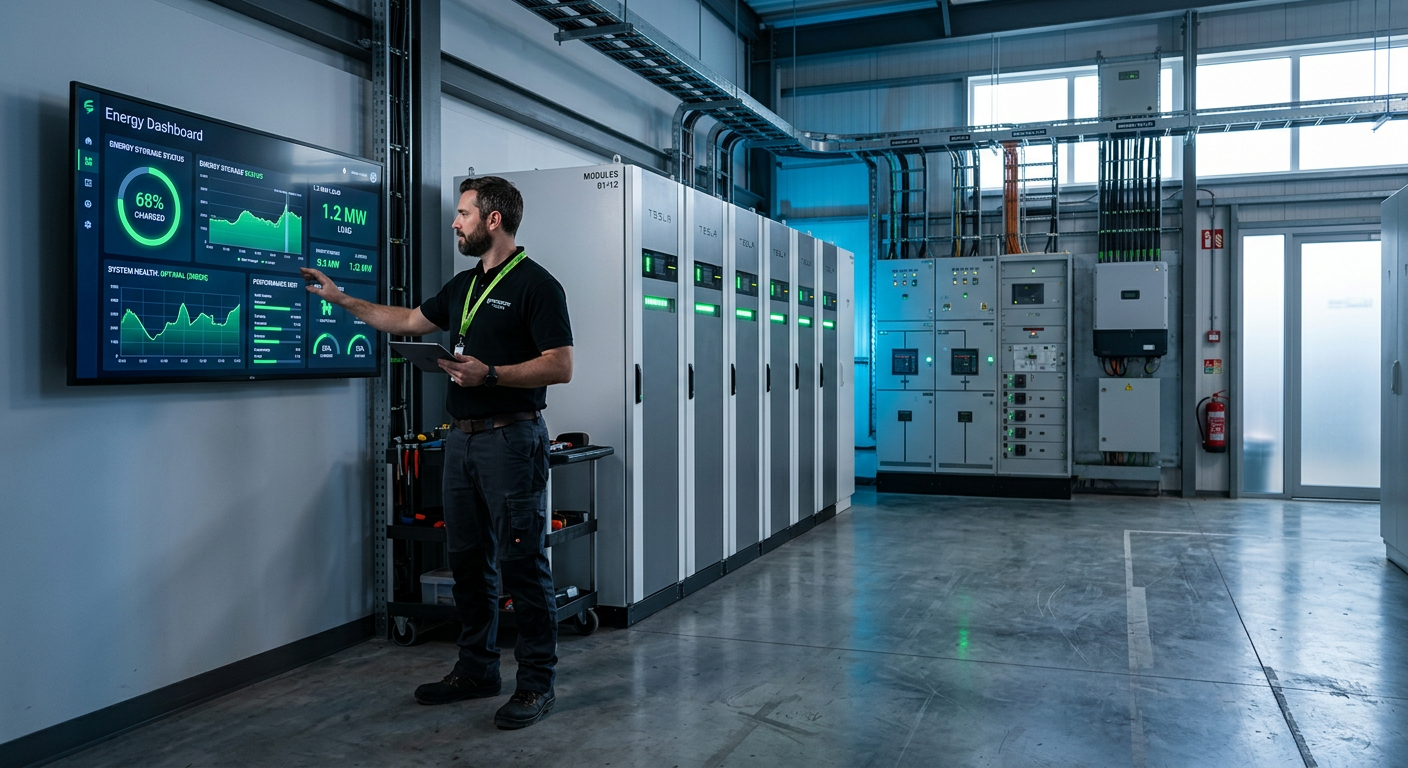
Five Core Benefits of Commercial Battery Storage
Lower Peak Demand Charges
Peak shaving is often the first financial use case to evaluate. When a facility approaches a high-demand interval, the energy-management system can dispatch battery power to reduce the electricity pulled from the grid. The goal is not to run the whole building from the battery every day, it is to trim the costly peak that can set the billing basis for the month.
This is especially relevant for restaurants, hotels, offices with heavy cooling loads, multifamily common areas, cold storage, and light industrial sites. The U.S. Department of Energy notes that onsite energy storage can reduce commercial and industrial demand charges when it is used during peak-demand periods, though the value always depends on the specific tariff and site load profile. Read the Department of Energy battery storage report for a deeper technical explanation.
Better Backup Power for Critical Loads
Outages do more than interrupt a workday. They can halt point-of-sale systems, affect tenant comfort, interrupt communications, compromise refrigerated inventory, and damage a business’s reputation with customers.
A commercial battery can support a defined critical-load panel during an outage. That may include emergency lighting, networking equipment, refrigeration, security, elevators where appropriate, or selected HVAC equipment. The right design starts with clear priorities, because backup duration depends on battery capacity and the loads the business chooses to support.
More Value From Solar Production
Solar panels generate the most electricity during daylight hours, but many facilities need significant power later in the afternoon or evening. Without storage, surplus production may be exported under utility rules that do not always deliver the same value as offsetting onsite usage.
Battery storage helps a business capture more solar energy for later use. This solar-plus-storage approach can increase self-consumption, reduce grid dependence during selected periods, and create a more flexible energy plan. Businesses weighing system design and economics can also review this commercial battery storage cost guide.
Greater Control Over Time-Based Energy Costs
Many commercial rates include time-of-use pricing, where electricity costs more during designated periods. Batteries can charge when energy is less expensive or when solar production is plentiful, then discharge when the building would otherwise buy higher-priced power.
Here’s the key distinction: battery storage is not a generic bill-cutting device. It works best when controls, capacity, power rating, utility pricing, and building operations all line up. A thorough load analysis is more valuable than a one-size-fits-all proposal.
Stronger Operational Resilience and Brand Confidence
For property owners, reliable operations are part of the customer experience. A hospitality business that remains functional, a school that preserves essential services, or a multifamily community that maintains communications during an outage can protect trust when conditions are difficult.
For dealers, that same reliability becomes part of your professional reputation. You are not simply presenting equipment. You are representing the installation quality, system design, communication process, and support that happen after the agreement is signed.
How We Evaluate the Right Battery Opportunity
Not every commercial solar project needs storage, and promising it where the economics do not work can hurt credibility. We recommend leading with site-specific facts: utility bills, interval data when available, operating hours, solar production, outage history, critical-load priorities, roof or land constraints, and the customer’s financial goals.
Start With the Load Profile
A facility with a flat, predictable load may have a different opportunity than one with brief but intense spikes. HVAC start-up, kitchen equipment, refrigeration, manufacturing equipment, pools, elevators, and EV charging can all change the result.
We look for the gap between normal demand and the highest demand intervals. That gap often reveals whether a battery could create value through demand management rather than simply providing backup power.
Match Capacity and Power to the Job
Battery capacity, measured in kilowatt-hours, affects how long stored energy can be available. Battery power, measured in kilowatts, affects how much demand the system can offset at a given moment. Both numbers matter, but they solve different problems.
For example, a building may need a high-power battery to shave a short, sharp peak, while a critical-load backup plan may require more stored energy to support essential operations for a longer period. This is why a real engineering review is essential.
Build Incentives Into the Financial Conversation
Federal incentives can materially improve project economics, but eligibility depends on project details, ownership structure, tax posture, prevailing requirements, and current law. Dealers should explain the opportunity carefully and encourage commercial buyers to consult a qualified tax professional before making decisions.
The best proposal shows the full picture: estimated energy savings, potential demand-charge reductions, resilience value, financing structure, maintenance expectations, and available tax incentives. A battery should earn its place in the design through clear business logic.
What Dealers and Sales Partners Can Sell With Confidence
Commercial buyers are increasingly looking for an energy strategy, not a commodity quote. Battery storage gives sales teams a way to discuss uptime, cost control, solar self-consumption, and future operational needs in one solution.
That requires a dependable installation partner behind you. When we work with dealers, we focus on commercial-grade design, transparent communication, project support, financing and tax-credit guidance, and long-term service planning. If you want to add a more complete energy solution to your portfolio, you can apply to become a solar dealer.
Proof matters in B2B sales, too. Before aligning your name with any installer, review project experience, warranty terms, communication standards, and customer sentiment. Our customer reviews and feedback give prospective clients and dealer partners a clearer view of the reputation they will be representing.
Frequently Asked Questions
What are the main benefits of commercial battery storage?
The primary benefits are lower peak demand charges, backup power for critical loads, greater use of onsite solar energy, and more control over time-based electricity costs. The best result depends on the facility’s tariff, load profile, solar production, and operational priorities.
Can a commercial battery reduce every business’s utility bill?
No. Storage is most compelling when a business has demand charges, time-of-use pricing, regular peak periods, outage concerns, or excess solar generation that can be used later. A utility-bill and interval-data review should come before any equipment recommendation.
How long can a commercial battery provide backup power?
It depends on the battery’s usable capacity and the critical loads connected to it. Supporting a smaller list of essential circuits generally extends backup duration more effectively than attempting to power the entire facility.
Does battery storage work without solar panels?
Yes. A standalone battery can be used for peak shaving, energy shifting, and selected backup applications. Pairing it with solar may create additional value by storing onsite renewable production for later use.
Which commercial properties are good candidates for storage?
Retail centers, offices, hospitality properties, multifamily communities, schools, churches, and light industrial facilities can all be viable candidates. The strongest prospects typically have meaningful energy use, a clear resilience need, or high demand-related utility costs.
Why should a dealer offer battery storage alongside commercial solar?
Storage expands the discussion from electricity generation to energy management. It can help you address business objections around outages, demand charges, and solar timing while presenting a more valuable, consultative solution.
Build Stronger Commercial Energy Solutions With Us
If you are a dealer or sales rep who wants commercial-grade solar and battery projects backed by transparent support, we invite you to become a solar dealer with Independent Solar. We help partners deliver solutions that protect their reputation, support stronger client conversations, and create long-term business opportunities.
For business owners, a thoughtful battery assessment can identify whether demand management, critical-load backup, or solar self-consumption should be part of your next energy project. Our team can help translate utility data and operational goals into a practical plan.
The Bottom Line
The real benefits of commercial battery storage come from control. Businesses can reduce expensive demand peaks, preserve critical operations during outages, use more of their solar energy onsite, and make energy spending less reactive.
For dealers, the opportunity is equally clear. When you lead with data, site-specific value, and a reliable delivery partner, you can create better commercial conversations and earn the trust that leads to repeat business. Explore the opportunity and submit a dealer application when you are ready to build your commercial energy portfolio.








 Arizona:
