
How to Spot Unreliable Solar Installers Before You Sign
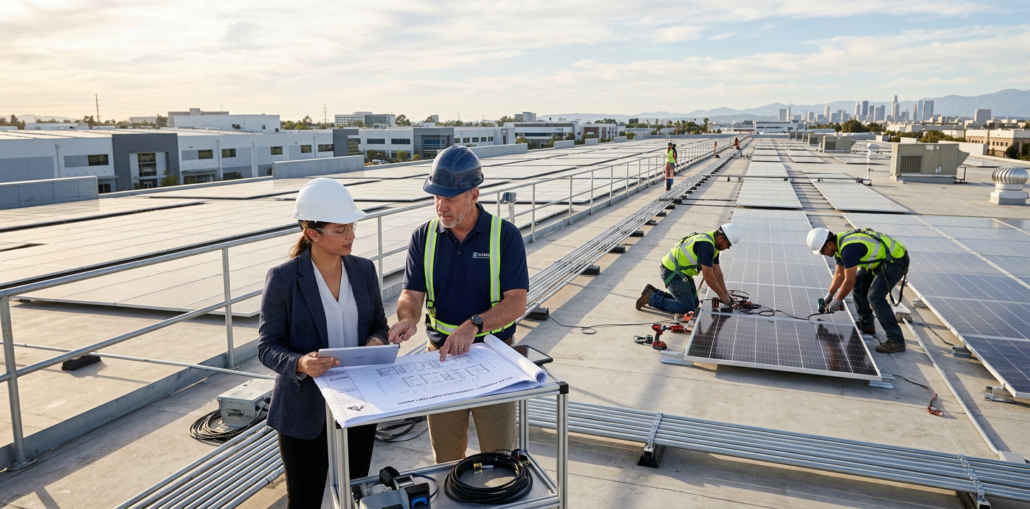
You can usually spot a shaky solar installer before the first panel goes up. The warning signs are rarely subtle, they show up in rushed quotes, vague answers, poor follow-up, and a sales process that feels more like pressure than partnership.
For commercial property owners, dealers, sales reps, and channel partners, that matters a lot. When the installer underperforms, it is not just the project that suffers, it can also damage your reputation, your referral pipeline, and your client trust.
Introduction
The good news is that unreliable installers tend to reveal themselves early if you know what to look for. That means you can protect your ROI, reduce project risk, and choose a partner you can confidently stand behind.
If you are evaluating partners in Arizona, Nevada, or Texas, the stakes are even higher because commercial solar, battery storage, and long-term service all depend on disciplined execution. That is why smart buyers and dealers compare more than price, they compare process, support, and reputation.
1. Watch for vague answers and missing details
Reliable installers answer direct questions clearly. Unreliable ones dodge specifics about equipment, permitting, timelines, warranties, and project management.
If someone cannot explain how they handle inspections, utility coordination, or roof coordination, that is a problem. Strong solar sales partnerships depend on transparency from day one, not after the contract is signed.
2. Be cautious when the quote feels too good to be true
The cheapest bid often leaves out something important. That could be engineering, monitoring, service, permitting, or the real labor needed to do the job right.
A low number can look attractive, but commercial buyers know the real cost appears later through delays, repairs, or production shortfalls. For a better benchmark, review the company’s track record on the reviews page and compare the bid to the scope, not just the headline price.
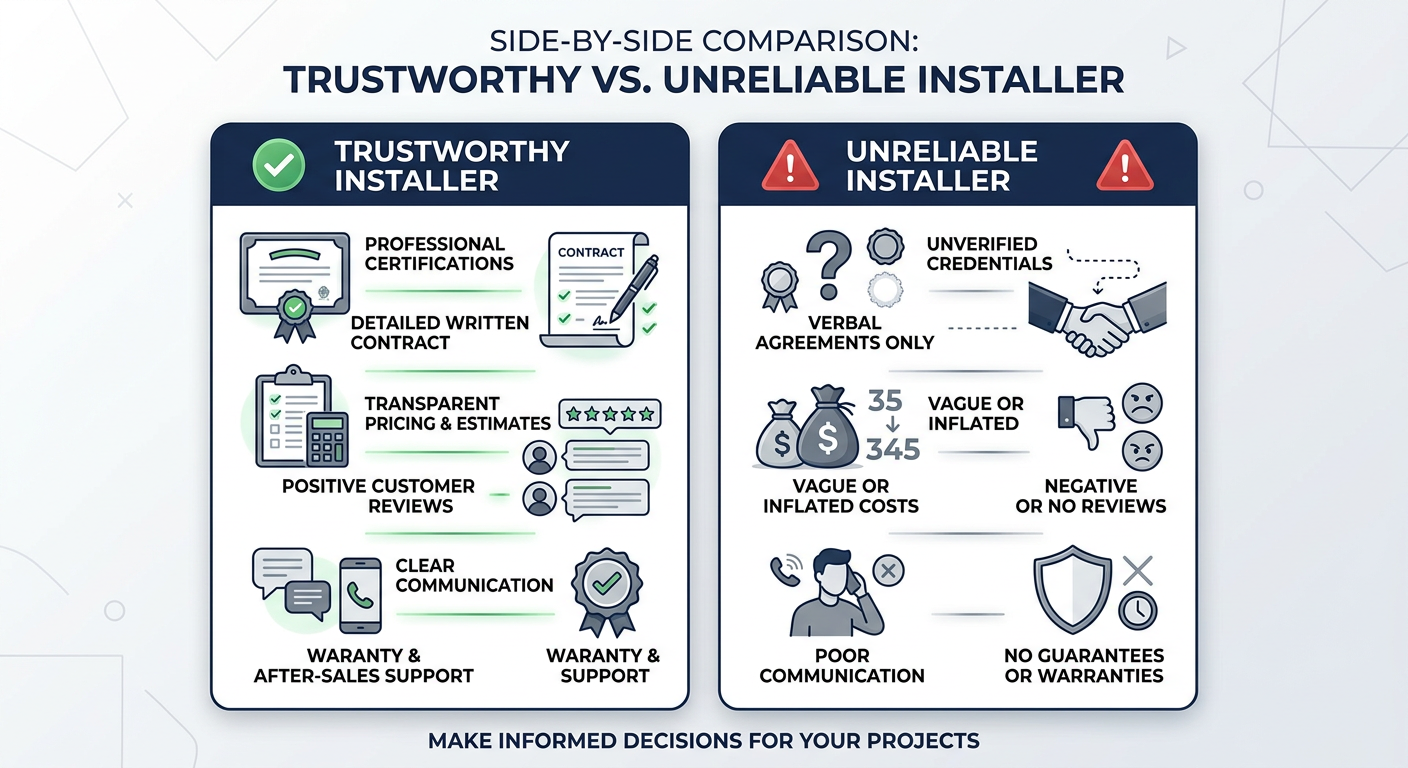
3. Look for weak communication during the sales process
If a company is slow to return calls before the sale, it usually gets worse after the deal is signed. That is one of the clearest signals of an unreliable solar installer.
You want a partner who sets expectations, communicates milestones, and keeps both you and your client informed. Dealers and sales reps especially need this because the installer’s communication becomes part of your own brand experience.
4. Check whether they have real commercial experience
Commercial solar is not the same as a small residential install. Retail, office, hospitality, multifamily, HOAs, schools, churches, and light industrial sites all bring different design, electrical, and scheduling challenges.
Ask for projects that are similar to yours, not just a generic portfolio. If the company cannot show experience with commercial-grade installs or battery storage for business, that is a major red flag.
5. Ask how they handle warranty and service after install
A lot of unreliable installers disappear once the final payment clears. That creates serious risk for property owners who need support, repairs, or system checks years later.
A trustworthy partner explains workmanship coverage, monitoring, maintenance, and response expectations upfront. If you are trying to protect your reputation as a dealer, this is one of the most important questions you can ask before you commit.
6. Pay attention to how they talk about subcontractors and labor
There is nothing wrong with using specialists when the process is controlled. The issue is when nobody can tell you who is actually doing the work or who is responsible if something goes wrong.
Ask who installs, who supervises, and who signs off on quality. Clear accountability is a hallmark of a reliable commercial solar installer, and it matters even more on larger roofs and battery projects.
7. Notice whether they push you to sign too fast
High-pressure sales is a classic warning sign. If the installer wants a signature before they have completed a real site review, design review, or financial explanation, slow down.
A strong partner should be comfortable walking you through project scope, ROI, tax-credit implications, and service expectations. If they are not, keep looking, because urgency without clarity often leads to regret.
Why dealers and partners should care even more
For B2B dealers, sales reps, and channel partners, the installer choice affects more than one project. It affects credibility.
When you align with the wrong company, you inherit their delays, their communication gaps, and their service problems. That is why many professionals prefer to become a dealer with a company that already has a structured process, commercial-grade capabilities, and a reputation they can confidently represent.
Independent Solar is built around that kind of partnership, with long-term support, installation quality, and a brand that is easier to stand behind. If you want a better sense of how that shows up in real-world customer experience, start with the reviews page.
What a reliable installer looks like instead
A dependable solar company does a few things consistently:
- Gives clear, written answers
- Provides commercial references
- Explains financing and tax-credit guidance
- Shows a defined project timeline
- Offers maintenance and repair support
- Communicates like a business partner, not just a seller
That combination is what buyers should expect when evaluating a commercial solar installer for a serious business project. It is also what makes a dealer relationship easier to scale.
FAQ
What is the fastest way to spot an unreliable solar installer?
Look for vague answers, pressure tactics, and a quote that skips important details. If they avoid questions about warranty, service, or commercial references, that is usually enough to walk away.
Should I trust the lowest bid?
Not by itself. In solar, the lowest bid often leaves out labor, service, monitoring, or engineering quality, which can cost more later.
Why do communication problems matter so much?
Because solar projects need coordination between sales, design, permitting, utilities, and installation. Poor communication usually leads to delays and customer frustration.
How do dealers protect their reputation?
Partner with a company that has strong reviews, clear service processes, and a record of commercial reliability. A dependable installer helps you close deals without creating avoidable problems.
What should a commercial solar proposal include?
It should clearly show system design, equipment, timeline, warranty terms, estimated output, and who handles post-install support. Anything less deserves a second look.
Is battery storage a good test of installer quality?
Yes. Battery storage for business requires careful design, coordination, and service planning, so it quickly reveals whether an installer is organized and technically capable.
Become a Dealer With a Team You Can Represent
If you are a dealer, rep, or partner who wants to align with a more reliable solar company, this is where the conversation gets practical. Become a dealer and evaluate whether the support, communication, and commercial process fit the way you sell.
If you are a property owner or decision-maker, review the company’s reputation first, then request a conversation through the contact page. The right partner should make your next project feel clear, not complicated.
Conclusion
Spotting unreliable solar installers is mostly about paying attention early. Vague answers, weak communication, rushed signatures, and no real service plan are all signs you should slow down or move on.
For commercial buyers and dealer partners, the safest choice is usually the one that protects your reputation, supports long-term performance, and communicates like a professional team. That is the standard worth insisting on every time.






 Arizona:
