
Multifamily Solar Panel Installation: What Owners Need to Know

Multifamily properties are under more pressure than ever to control operating costs, protect margins, and show tenants they are investing in long-term value. That is why multifamily solar panel installation is becoming a serious conversation for apartment owners, HOAs, and property managers who want predictable savings without sacrificing curb appeal or reliability.
The best part is that solar is no longer just a homeowner talking point. For business-minded owners, it is a practical asset strategy. When done right, it can help reduce utility expenses, strengthen property value, and support a stronger reputation with residents and investors alike.
Why Multifamily Solar Makes Business Sense
Multifamily buildings are ideal candidates for solar because they often have large roof areas, consistent energy demand, and long-term ownership horizons. That combination creates a strong case for investment, especially when utility costs keep rising.
For owners and operators, the real value goes beyond lower bills. Solar can help stabilize expenses, support ESG goals, and create a better story for leasing and retention. If you are also exploring broader commercial opportunities, the commercial solar solutions page is a useful place to compare project types.
Key benefits for owners
- Lower common-area electricity costs
- Better long-term operating predictability
- Stronger property positioning in competitive markets
- Potential tax and incentive advantages
- Improved reputation with residents and stakeholders
What Makes Multifamily Projects Different
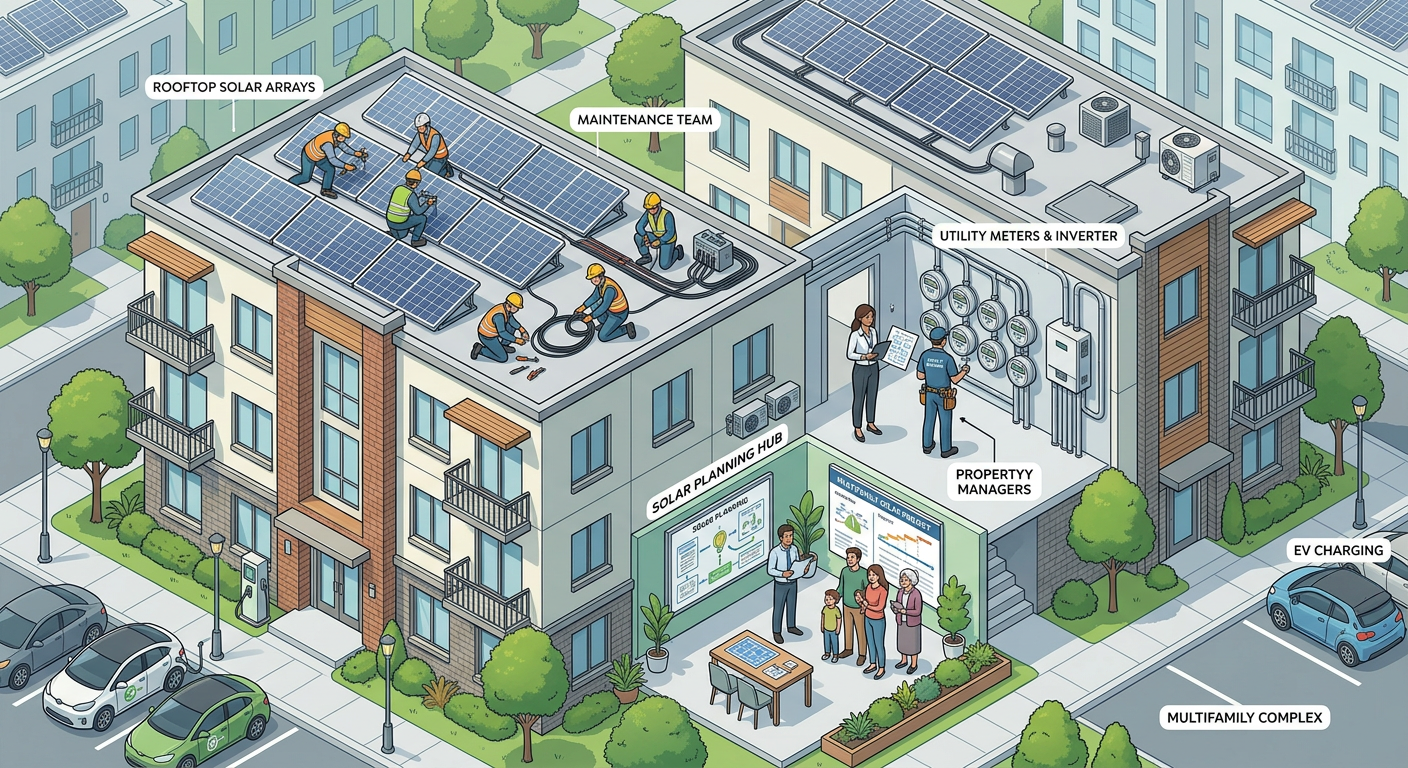
A multifamily solar project is not the same as a standard retail or office install. The electrical layout is often more complex, there may be multiple meters, and the ownership structure can involve tenants, common areas, and shared systems.
That is why installation quality and communication matter so much. A weak contractor can create delays, poor savings estimates, and ongoing maintenance headaches. A reliable partner should be able to explain the scope clearly, coordinate with property leadership, and stand behind the work.
Where Savings Usually Come From
Solar savings in multifamily settings usually come from common-area loads, master-metered systems, or carefully structured allocations depending on the property model. In many cases, the largest wins happen where daytime usage is steady and predictable.
Battery storage can add another layer of value by helping manage peak demand or backup needs. If your property has resilience goals, the solar battery storage page can help you think through how storage supports multifamily operations.
Common savings opportunities
- Hallway and exterior lighting
- Leasing offices and amenity centers
- Pool equipment and shared facilities
- HVAC support loads
- Peak-demand reduction strategies
Why Dealers and Sales Partners Should Pay Attention
This category is not just important for owners. It is also a strong opportunity for B2B dealers, reps, and channel partners who want to align with a trustworthy solar company. Multifamily and commercial projects often require a more professional process, better coordination, and a brand that property owners can confidently represent.
That is where a structured partner program matters. If you are looking to become a dealer, Independent Solar is built around commercial-grade execution, transparent support, and long-term relationships that help partners grow with confidence.
Why partners benefit
- Professional project support
- Better trust with commercial buyers
- Stronger reputation in the market
- Access to recurring opportunity in Arizona, Nevada, and Texas
- A company image that fits serious property owners
Reputation Matters as Much as Hardware
In multifamily, the installer is not just selling equipment, it is representing your property and your reputation. Owners, boards, and managers want proof that the company they choose can communicate well, finish cleanly, and support the system after completion.
That is why reviews matter. Before you choose a contractor, review real customer feedback on the Independent Solar reviews page. In a market where trust drives referrals and repeat business, social proof can be the difference between winning a project and losing it.
Financing, Incentives, and Tax Credit Considerations
Many multifamily owners want to know whether solar pencils out after incentives. The short answer is that it depends on system size, usage profile, financing, and how the property is structured. The federal tax credit can be an important part of the equation, but the project still needs to make sense on its own operating merits.
For a deeper look at incentives, the federal solar tax credit resource is a helpful starting point. Smart buyers focus on total lifecycle value, not just the sticker price.
Questions to ask before moving forward
- What utility costs can be offset?
- How long is the payback period?
- What incentives are available now?
- Who maintains the system after install?
- How will the project affect tenants and operations?
How to Choose the Right Installer
The right installer should do more than quote panels. They should evaluate roof condition, electrical infrastructure, shading, system sizing, and long-term service needs. In multifamily settings, they should also understand tenant communication, timelines, and how to minimize disruption.
Look for a team that treats the project like a long-term asset, not a one-time transaction. That is especially important for property owners who need a partner they can rely on for maintenance, repairs, and future upgrades.
Become a Dealer With a Company Built for Long-Term Trust
If you are a sales rep or dealer looking for a stronger solar partner, alignment matters. You need a company that communicates clearly, installs professionally, and supports your reputation in the field.
That is why many partners explore how to become a dealer with Independent Solar. The goal is simple, give you a platform that helps you win more business while protecting your brand.
FAQs
Is multifamily solar panel installation worth it?
Yes, it can be, especially when the property has steady common-area usage, strong roof space, and a long ownership timeline. The best projects create lower operating costs and stronger property value.
Can solar work on apartment buildings with multiple meters?
Yes, but the project design needs to match the property’s electrical setup. Master-metered and common-area systems are often simpler, while more complex setups may require additional planning.
Does battery storage help multifamily properties?
It can. Battery storage may improve resilience and help manage peak demand, especially for common spaces or facilities that need backup power.
How do I know if my property is a good fit?
A site assessment is the best first step. Roof condition, utility usage, shading, and ownership structure all affect whether the project will perform well.
Why does installer reputation matter so much?
Because the installer represents your property to tenants, board members, and stakeholders. Poor communication or sloppy work can damage trust long after the project is complete.
How can dealers benefit from multifamily solar projects?
Multifamily projects create repeatable opportunities for partners who want commercial-grade work, stronger deal flow, and a company they can confidently align with.
Take the Next Step
Multifamily solar is not just about panels on a roof, it is about better margins, better operations, and better long-term positioning. If you own or manage apartment assets, now is the time to evaluate whether solar can reduce costs and improve resilience.
If you are a dealer or sales partner, this is also a chance to work with a company that values communication, reputation, and long-term performance. Explore becoming a dealer and see why Independent Solar is a strong fit for serious partners.




 Arizona:
