
Solar Tax Credit for Businesses: What Owners Need to Know

Businesses are still looking for ways to cut overhead without sacrificing reliability, and that is exactly where the solar tax credit for businesses keeps getting attention. For property owners, dealers, and sales partners, the opportunity is bigger than a tax benefit. It is a practical way to improve project economics, strengthen client conversations, and support long-term energy savings.
Here’s the thing. Commercial solar is not just about panels on a roof. It is about controlling operating costs, improving resilience, and creating a cleaner financial story for facilities that run every day. For B2B buyers across Arizona, Nevada, and Texas, that matters just as much as the equipment itself.
What the Solar Tax Credit for Businesses Actually Does
The federal investment tax credit, often called the ITC, helps eligible businesses reduce federal tax liability based on a percentage of qualified solar project costs. In plain English, it lowers the effective cost of going solar, which can improve ROI and shorten payback periods. The U.S. Department of Energy explains the credit framework, and businesses should always confirm current eligibility with a tax professional.
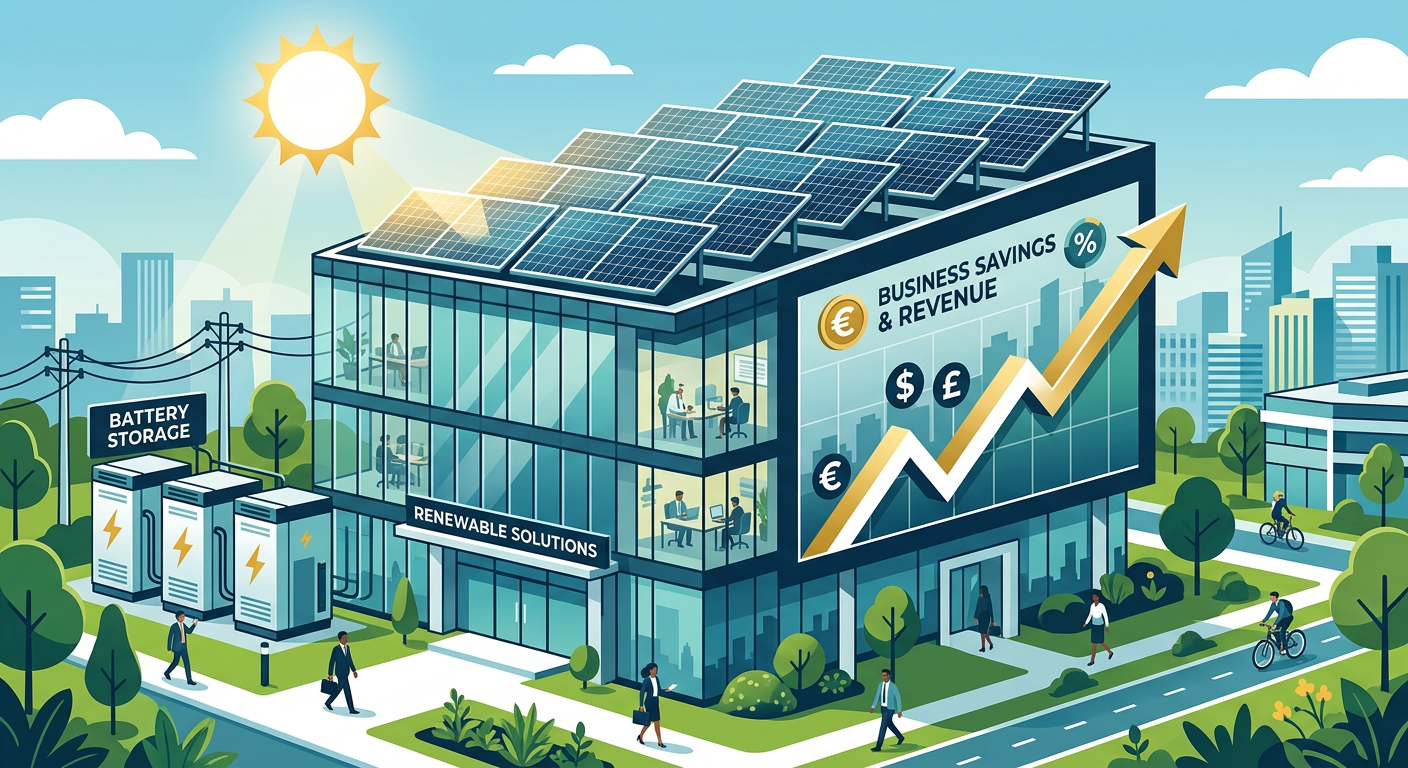
For commercial property owners, this can apply to rooftop systems, ground-mount systems, and in some cases battery storage when paired with solar, depending on the project structure and current rules. That is why the right installer and partner matter. A well-designed project is easier to finance, easier to defend internally, and easier to explain to stakeholders.
Why It Matters for Commercial Properties
A strong solar tax credit strategy can make a meaningful difference for:
- Retail centers trying to reduce utility spend
- Offices managing predictable overhead
- Hospitality sites with heavy daytime energy use
- Multifamily properties balancing resident comfort and common-area costs
- HOAs, schools, churches, and light industrial facilities looking for long-term savings
In these categories, the best projects are not always the biggest ones. They are the ones that combine utility savings, installation quality, and a clear path to incentives. If you are evaluating a partner, it helps to review both capability and credibility. Independent Solar’s commercial solar solutions are built for businesses that want professional execution, while their reviews can help you gauge how they support clients after the sale.
How Dealers and Sales Reps Can Use This Conversation
If you are a dealer, rep, or channel partner, the tax credit is more than a technical detail. It is a trust-building tool. Business owners want to know whether solar will work financially, not just technically. When you can explain incentives clearly, you become more valuable in the sales process.
That is one reason a structured partner program matters. Independent Solar positions itself as a reliable team for people who want to Become a Dealer and align with a company that can support commercial-grade projects, financing conversations, and long-term client confidence. If you are building your book of business, the right backend support can make or break your reputation.
What Business Owners Should Ask Before Moving Forward
Before you lock in a project, ask these questions:
Is the system sized for real usage?
A good solar plan should match load profile, not just roof space. Your installer should review bills, demand patterns, and future expansion needs.
Are incentives being handled correctly?
Tax credits, depreciation, and local utility programs can affect project economics. A knowledgeable team should help you organize the information without overpromising outcomes.
What kind of long-term support is included?
Installation day is not the finish line. Maintenance, repairs, monitoring, and warranty support matter just as much after the system is live.
Does the installer have a reputation you can stand behind?
For B2B buyers and partners, this is huge. A trusted brand reduces friction with stakeholders and makes it easier to win repeat business.
Battery Storage Can Strengthen the Business Case
Solar plus storage often becomes more compelling when a facility wants backup support or better control over peak usage. In some cases, storage can help with resilience during outages or support broader energy management goals. The solar battery storage option is worth discussing early, especially for operations that cannot afford interruptions.
That is also where project quality matters. Clean engineering, clear communication, and reliable installation teams reduce risk for everyone involved. Businesses are not just buying kilowatts. They are buying confidence.
The Reputation Factor Most Buyers Overlook
The tax credit can improve economics, but reputation closes the deal. Commercial customers want a company that shows up, communicates well, and finishes strong. Dealer partners want a brand they are proud to represent. That is why social proof matters, and why checking reviews should be part of the decision-making process.
If you are comparing partners, look for consistency. Do they communicate clearly? Do they support commercial clients well after installation? Do they help their dealers grow? Those details matter when the project is tied to a facility, a team, and a multi-year financial commitment.
Frequently Asked Questions
What is the solar tax credit for businesses?
It is a federal tax incentive that can reduce the cost of qualifying commercial solar projects by lowering federal tax liability.
Can battery storage qualify too?
Sometimes, depending on how the project is structured and the current rules. It is best to confirm with a qualified tax advisor and installer.
Does every business benefit equally?
No. The value depends on tax appetite, project size, utility rates, load profile, and financing structure.
Why does installer reputation matter so much?
Because commercial solar is a long-term asset. Businesses want dependable installation quality, support, and service after commissioning.
How can dealers use this incentive in sales conversations?
Dealers can use it to explain ROI, strengthen trust, and help clients understand why the project makes financial sense now.
Where should I start if I want to become a dealer?
Start by evaluating the company’s support, communication, commercial capability, and reputation, then explore the application form.
Ready to Explore a Better Solar Partner?
If you are a business owner or channel partner, the solar tax credit is only part of the story. The bigger win comes from choosing a company that delivers quality, support, and a reputation you can trust. Independent Solar is built for commercial clients and dealer partners who want a professional brand behind them.
If you are ready to grow, Become a Dealer and see how a stronger partnership can support your business. You can also review real customer feedback at Independent Solar reviews before you move forward.
Conclusion
The solar tax credit for businesses can be a powerful lever for lowering project cost and improving ROI, but the real value comes from pairing it with the right installer and support team. For commercial buyers and dealers, that means focusing on reliability, transparency, and long-term performance. When those pieces come together, solar becomes more than an incentive, it becomes a strategic business decision.






 Arizona:
