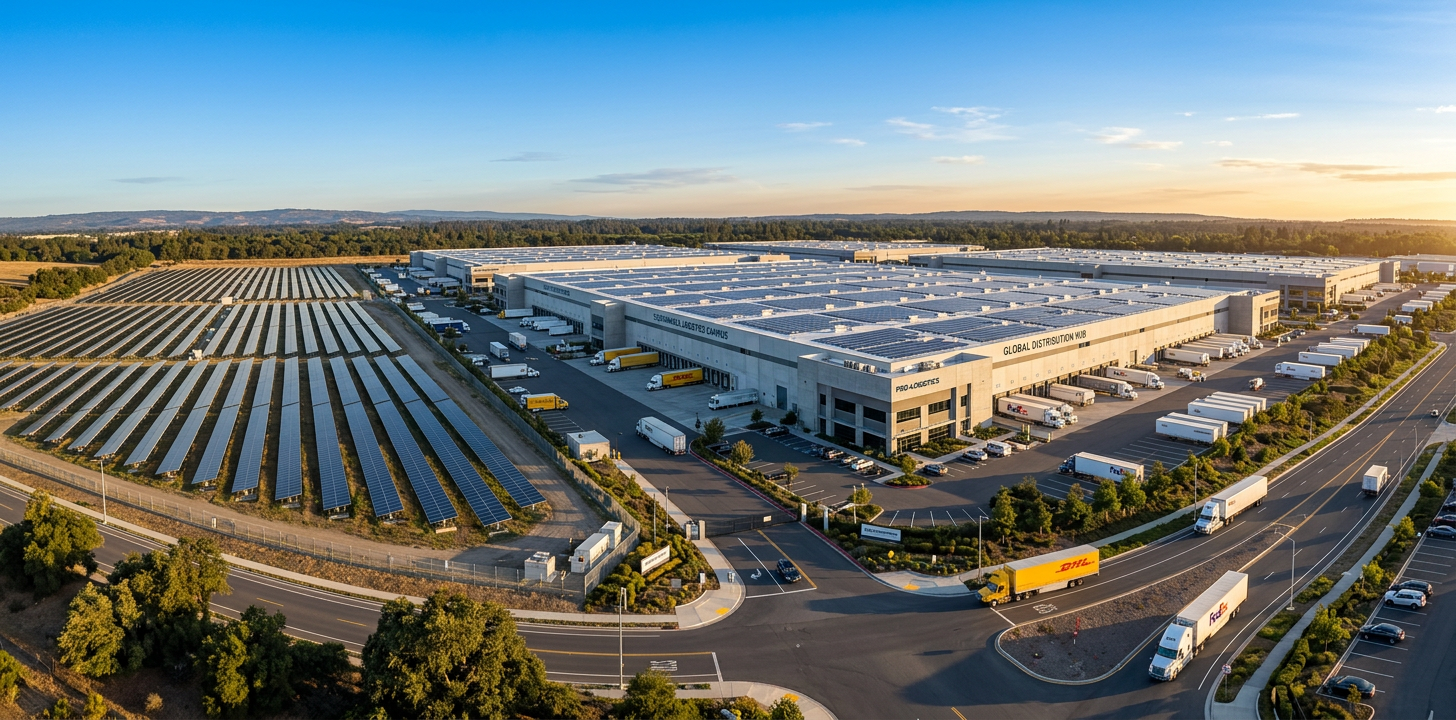
Warehouses have one big advantage in the solar conversation, lots of usable roof space. But that does not automatically make rooftop the best answer. When you compare solar ground mount vs rooftop for warehouses, the right choice usually comes down to roof condition, energy goals, site layout, and how much control you want over long-term performance.
For B2B buyers, dealers, and channel partners, this is more than a design preference. It is a sales, operations, and reputation decision. A system that is easy to explain, easy to maintain, and built for long-term reliability can strengthen client confidence and open the door to more referrals, stronger reviews, and more opportunities to Become a Dealer.
Solar Ground Mount Vs Rooftop For Warehouses: What Changes The Outcome
The biggest difference is simple. Rooftop solar uses the building you already have, while ground-mount solar uses land near the building. For many warehouses, rooftop is the faster path because the property already has a large, flat roof that can support a sizable array.
Still, ground-mount systems can be the smarter fit when the roof is old, shaded, structurally limited, or already packed with HVAC equipment, vents, and safety clearances. That flexibility matters if the warehouse owner wants a cleaner path to expansion later.
Why Rooftop Solar Often Wins For Warehouses
Rooftop solar is often the first option warehouse owners consider because it makes use of idle space. If the roof is large, unobstructed, and in good condition, you can often maximize production without sacrificing valuable ground area for parking, loading, or future facility growth.
Rooftop strengths
- Uses existing space without requiring land acquisition
- Can reduce project footprint and keep the property tidy
- Often pairs well with large, flat commercial roofs
- May be easier to justify when land is limited or expensive
Rooftop tradeoffs
- Roof age and condition matter a lot
- Maintenance can be harder if the array covers a large surface
- Expansion may be limited by roof layout or structural capacity
- Re-roofing can create extra coordination later
If you are evaluating a commercial building, it is worth pairing solar planning with a roof review first. That keeps the project aligned with long-term asset management instead of solving only this year’s utility bill.
When Ground-Mount Solar Makes More Sense
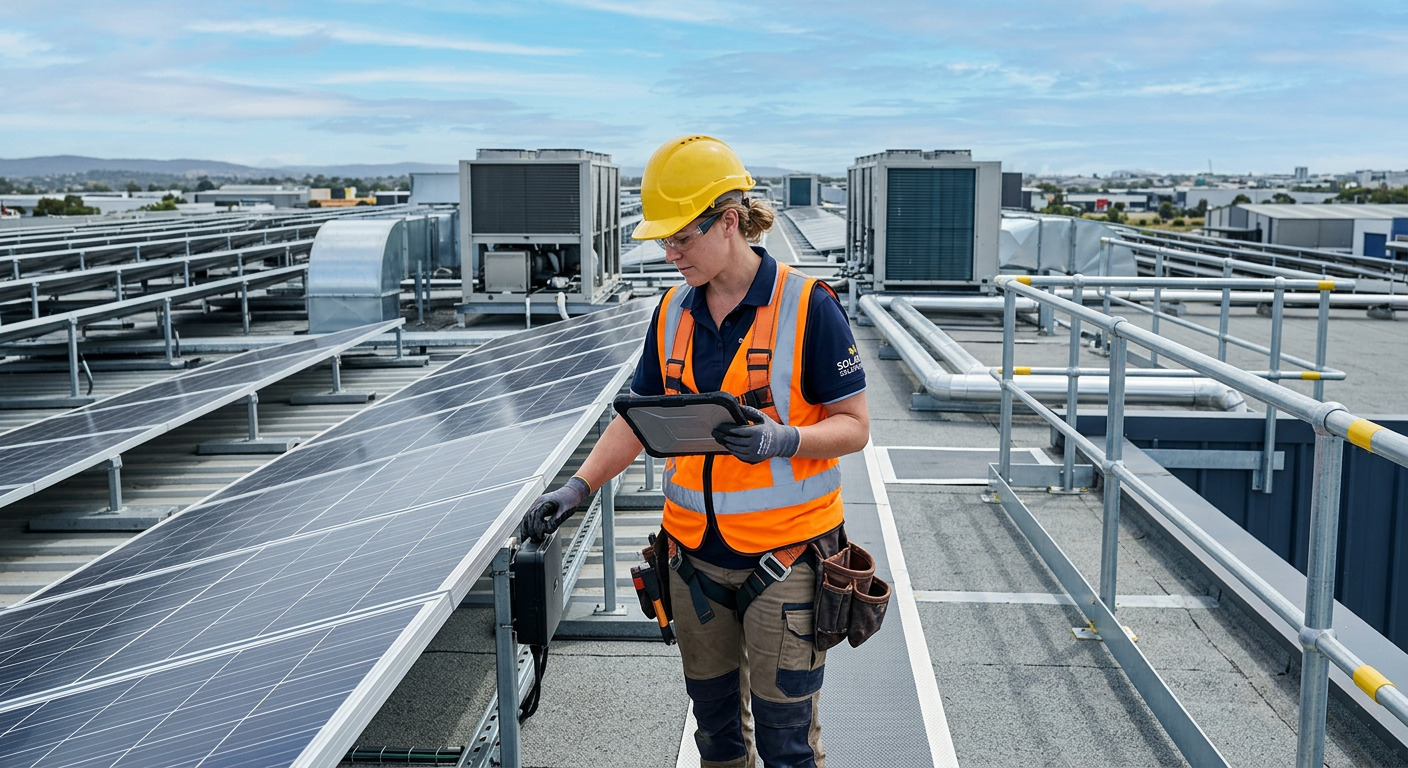
Ground-mount solar shines when the warehouse site has room to spare or the roof is not the best host for a system. It can be especially helpful for properties that want easier access for maintenance, optimized tilt angles, or a phased expansion plan.
Ground-mount strengths
- Easier access for cleaning, maintenance, and repairs
- Greater flexibility in panel tilt and orientation
- Useful when the roof is too old or too constrained
- Can be expanded more easily in some layouts
Ground-mount tradeoffs
- Requires usable land near the warehouse
- May involve more site work and civil planning
- Can face shading, drainage, or setback challenges
- May not be ideal if the property is land-constrained
For warehouses in Arizona, Nevada, and Texas, ground-mount can be attractive when there is extra parcel space and a strong focus on maintainability. That said, if land is valuable for logistics, truck movement, or future buildout, rooftop often preserves operational flexibility.
What Warehouse Owners Should Evaluate First
Before choosing between rooftop and ground-mount, look at the site as a whole, not just the panel location. The right answer usually shows up after a simple feasibility review.
1. Roof age and structural condition
A roof near replacement is a warning sign. In that case, it may be better to handle roof work first or shift to ground-mount if the property allows it.
2. Available land and setbacks
If the warehouse has open land that will not interfere with operations, ground-mount becomes more competitive. If every square foot is tied to logistics, rooftop usually has the edge.
3. Energy use pattern
Warehouses often have high daytime usage from HVAC, lighting, refrigeration, conveyors, and distribution activity. That load profile can make solar a strong match either way, especially when paired with battery storage for business continuity and demand management.
4. Maintenance access
Think beyond installation day. Systems that are simple to service tend to hold up better over time and make your operations team happier.
5. Long-term expansion plans
If the business expects to grow, the solar layout should leave room for that. A design that looks great today but blocks future expansion can become an expensive mistake.
Which Option Is Better For ROI
There is no universal winner. Rooftop usually wins when the warehouse already has usable roof area and limited land. Ground-mount can win when site conditions make rooftop expensive, disruptive, or short-lived.
The best ROI answer depends on factors like:
- Construction complexity
- Roof replacement timing
- Maintenance costs over time
- System size and production potential
- Utility bill structure and demand charges
- Incentives and tax credit positioning
For a deeper commercial perspective, see commercial solar solutions and federal solar tax credit guidance. Those pieces can help owners understand how project structure affects payback and tax treatment.
Why Dealers And Sales Reps Should Care
This topic is not just about engineering. It is also about trust. When you can clearly explain the difference between rooftop and ground-mount options, you look more credible in front of warehouse owners, property managers, and investors.
That is exactly why a strong partner matters. Independent Solar is built for professionals who want a reliable brand, transparent support, and commercial-grade execution they can stand behind. If you want to Become a Dealer, this is the kind of consultative conversation that helps close deals and build repeat business.
Real-world reputation also matters. Before choosing a partner, buyers and partners should review social proof, install quality, and customer experience at Independent Solar reviews. A clean reputation makes the sales process easier and protects your own brand.
Practical Recommendation For Warehouse Projects
If the warehouse roof is structurally sound, relatively new, and largely open, rooftop solar is often the most efficient path. If the roof is aging, crowded, or not worth investing around, ground-mount may be the better long-term play.
In many cases, the best answer is not one or the other. It is a site-specific design that balances production, maintenance, roof life, and business operations.
FAQ
Is rooftop solar cheaper than ground-mount for warehouses?
Usually, rooftop solar can be more cost-effective when the roof is in good shape and easy to use. Ground-mount may cost more upfront because of site work, but it can offer better maintenance access and flexibility.
What happens if the warehouse roof needs replacement later?
That is a major planning issue. If a roof is near end of life, it may make sense to replace it before installing panels or consider ground-mount if the site supports it.
Can warehouses use both rooftop and ground-mount solar?
Yes. Some facilities use a hybrid approach when roof space alone is not enough. That can help maximize production while keeping land use efficient.
Which option is better for maintenance?
Ground-mount is usually easier to access for cleaning and repairs. Rooftop systems can still be very effective, but maintenance logistics are more involved.
Does solar help warehouses with demand charges?
It can, especially when paired with battery storage and smart load management. That is one reason commercial solar design should be tied to the utility bill, not just the roof.
Why should dealers focus on warehouse solar projects?
Warehouses tend to have meaningful loads, repeatable project structures, and strong long-term value. For dealers, that means better opportunities for reputation, referrals, and growth when the work is handled well.
Start Building Better Commercial Solar Partnerships
If you work in solar sales or serve commercial clients, the right partner can make a huge difference. Independent Solar supports dealers, sales reps, and channel partners with commercial-grade installs, transparent communication, and long-term reliability that helps you protect your reputation.
If you are ready to Become a Dealer, or you want a trusted commercial partner for warehouse projects, now is the time to connect. You can also review client feedback at Independent Solar reviews and see how a stronger solar partner can help you win more business.
Conclusion
For warehouses, the solar ground mount vs rooftop decision comes down to site reality, not guesswork. Rooftop is often the simplest and most space-efficient option, while ground-mount can be the smarter choice when roof conditions or maintenance needs create risk.
Either way, the best outcome comes from a partner who understands commercial performance, long-term support, and trust. That is how you build better projects, better client experiences, and better growth for your business.
Comments
18 responses to “Solar Ground Mount Vs Rooftop For Warehouses: Key Differences”
clozaril medication
clozaril medication
dog sildenafil dosage
dog sildenafil dosage
sildenafil 100mg
sildenafil 100mg
finasteride spray cost
finasteride spray cost
finns semaglutid naturligt
finns semaglutid naturligt
viagra apple
viagra apple
viagra cialis online
viagra cialis online
flagyl antibiotic cost
flagyl antibiotic cost
flagyl itchy anus
flagyl itchy anus
bupropion mechanism of action depression
bupropion mechanism of action depression
ketoconazole for redness and scaling
ketoconazole for redness and scaling
toradol pain relief reference
toradol pain relief reference
ivermectin topical FAQ
ivermectin topical FAQ
minoxidil foam vs liquid pk differences
minoxidil foam vs liquid pk differences
avanafil price overview page
avanafil price overview page
insurance coverage denial reasons
insurance coverage denial reasons
Food and Onset Timing
Food and Onset Timing
PK Variability Overview
PK Variability Overview