
Long Term Commercial Solar Maintenance: Protect ROI & Uptime

Commercial solar installations are an investment, not a fire-and-forget purchase. You want reliable energy production, steady savings, and minimized downtime for tenants or tenants' operations. That is where long term commercial solar maintenance comes in: planned inspections, performance monitoring, repairs, and strategic upgrades that protect system output and your bottom line.
In this article you will learn practical maintenance schedules, cost-control strategies, the role of monitoring and battery storage, and why dealers and sales reps should partner with a company that stands behind every commercial project over the long haul. To help you take action, I highlight proven programs and link to Independent Solar dealer and review pages you can trust.
Why long term commercial solar maintenance matters
Solar panels degrade slowly, but small failures and system drift add up. Left unchecked, a handful of underperforming strings or an inverter fault can shave 10 to 30 percent off a system's expected output. Regular maintenance preserves warranty compliance, protects ROI, and reduces costly emergency repairs.
Key benefits of a disciplined maintenance program:
- Maximize energy production and utility bill savings.
- Extend equipment life and protect warranties.
- Prevent unexpected downtime for commercial tenants.
- Improve ROI and financial predictability for stakeholders.
Core elements of a commercial maintenance plan
Scheduled inspections and cleaning
Routine visual inspections twice per year, with cleaning timed to local climate and soiling patterns, keep modules operating near nameplate performance. Focus on:
- Module cleanliness and bird or debris buildup
- Roof penetrations, flashing, and water management
- Mounting hardware, torque checks, and corrosion
Performance monitoring and data analytics
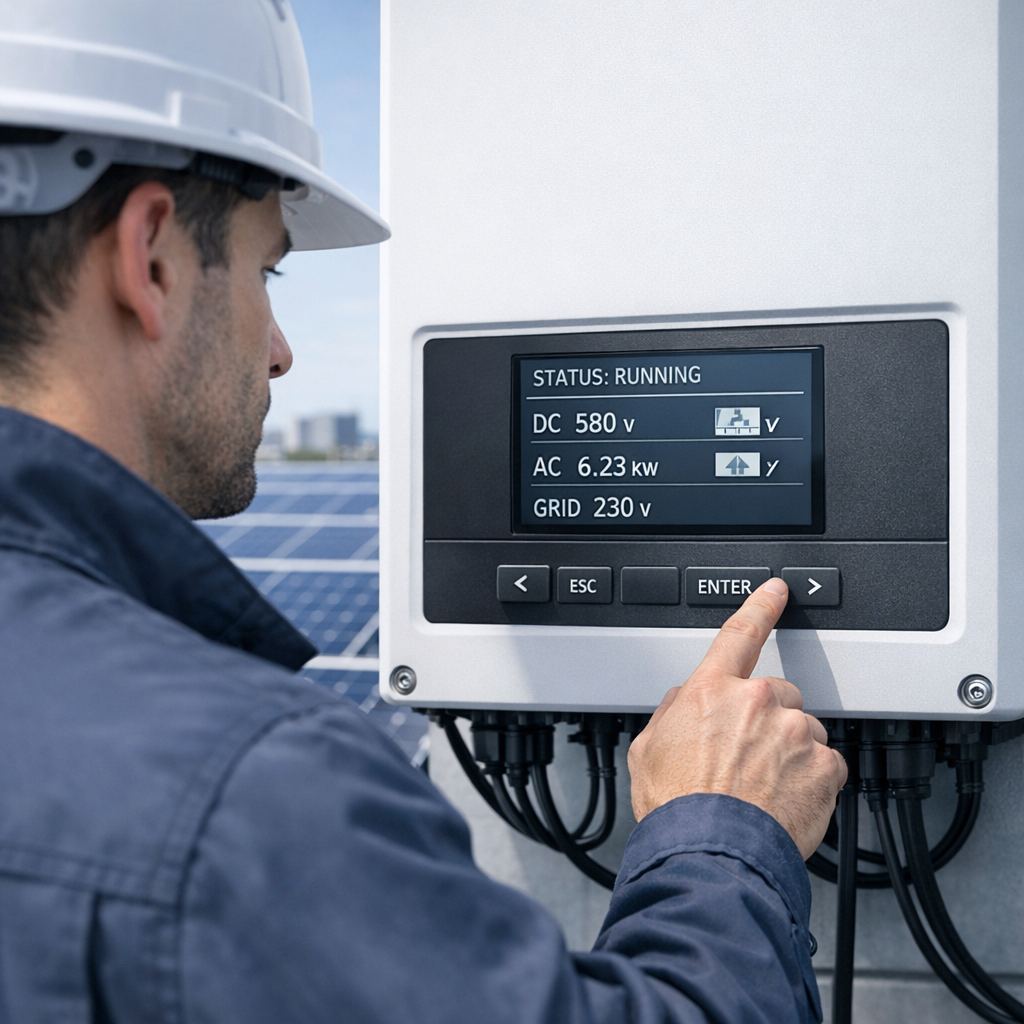
Remote performance monitoring spots underperformance fast. You want real-time alerts for string-level drops, inverter faults, rapid production loss, or battery issues. Combine monitoring with quarterly data reviews and year-over-year trend analysis to detect gradual degradation.
Preventative electrical maintenance
Qualified electricians should perform periodic checks on combiner boxes, conduit, grounding, and DC/AC disconnects. Tightening connections and cleaning terminals on schedule avoids thermal failures and fire risk.
Inverter and balance-of-system (BOS) servicing
Inverters are the most active service items in a commercial system. Replace fans, update firmware, and test protection settings on manufacturer schedules. Also inspect and test any energy meters, transfer switches, and battery inverters for proper operation.
Battery storage maintenance
If your project includes storage, add battery health checks, state-of-charge calibration, and thermal system inspections. Battery upkeep is essential to preserve backup capability and demand-charge management benefits.
Typical maintenance frequency and budgets
- Visual inspections: 2x per year
- Cleaning: 1x to 4x per year depending on soiling and environment
- Electrical and BOS checks: annually
- Monitoring review and firmware updates: quarterly
Budget guidance: plan for 0.5 to 1.5 percent of initial system cost per year for preventative maintenance, adjusting for site complexity and whether battery storage is included. Regular planned spend saves more than reactive emergency repairs.
Tracking ROI and performance metrics
Measure:
- Energy yield (kWh) per kW installed
- Performance ratio compared to expected output
- Downtime hours and fault response time
- Demand charge reduction or backup availability when storage is present
Benchmarking against pre-installation models helps you spot performance drift early and justify upgrades or repairs to owners.
Why dealers and sales reps should insist on robust maintenance offerings
Here is the thing, your reputation as a dealer is tied to the systems you sell long after installation. Offering or aligning with a provider that guarantees long-term maintenance means:
- Better client retention and referral growth
- Higher perceived value and easier sales conversations
- Reduced warranty and service disputes
Become a Solar Dealer With Independent Solar to offer commercial-grade installations plus long-term maintenance and support. Apply here: https://independentsolar.com/application-form/ — transparent commissions and structured dealer support make it easy to grow your portfolio.
Choosing the right maintenance partner
Look for a partner that provides:
- Clear SLA response times and escalation paths
- Trained technicians and certified electricians
- Integrated monitoring and reporting tools
- Transparent pricing and bundled service plans
- Battery and inverter expertise
Independent Solar delivers commercial installs, battery storage, and long-term solutions designed for dealers and property owners. Learn more and see customer feedback: https://independentsolar.com/reviews/.
Common objections and how to answer them
- "Maintenance costs too much" — Planned maintenance reduces major failures and emergency costs, typically saving money over the system lifetime.
- "We don’t need monitoring" — Without monitoring you’re blind to underperformance. Monitoring often pays for itself by revealing lost production quickly.
- "Our panels are low maintenance" — Panels are low maintenance in theory, but real-world factors like soiling, shade growth, roof changes, and thermal cycling create issues that require attention.
Upgrades and lifecycle planning
Plan for mid-life upgrades at 10 to 15 years: inverter replacement, firmware refreshes, and potential module repowering can restore or improve output. Battery systems may also need refresh cycles based on chemistry and cycle usage.
FAQs
How often should a commercial system be inspected?
At minimum, schedule inspections twice a year, with additional checks after storms or roof work. High-soiling environments need more frequent cleaning.
What does a monitoring platform actually detect?
Monitoring detects string or module underperformance, inverter faults, production drops, and battery anomalies. Combined with analytics, it points to root causes quickly.
Can maintenance extend panel warranty claims?
Yes, documented maintenance and timely repairs often help preserve warranty coverage and make warranty claims smoother.
How much should I budget for long term maintenance?
Plan 0.5 to 1.5 percent of system cost annually for preventative care. Tailor the budget for batteries, complex roof systems, and remote sites.
Do dealers get support for handling service calls?
A strong dealer program provides training, escalation protocols, and branded customer service options so dealers retain client relationships while leveraging an experienced service team. Apply to become a dealer: https://independentsolar.com/application-form/.
Is battery maintenance different from panel maintenance?
Yes, batteries require state-of-health monitoring, thermal management checks, and cell-level testing, on top of typical electrical inspections.
Reputation, reviews, and proof you can trust
Reputation matters in commercial projects. Independent Solar publishes client reviews and project case studies so dealers and property owners can evaluate real outcomes. See verified feedback and service history here: https://independentsolar.com/reviews/.
Next steps for property owners and dealers
If you manage commercial properties across Arizona, Nevada, or Texas and want systems that perform year after year, start with a maintenance-first approach: audit existing systems, install monitoring, and set a preventative schedule. Dealers seeking partnership opportunities should apply to join the Independent Solar dealer network to get training, margins, and long-term support: https://independentsolar.com/application-form/.
Ready to protect your investment and grow your business?
Independent Solar builds commercial-grade systems and supports them with structured maintenance programs designed for reliability, uptime, and ROI. If you want to offer dependable solar solutions and scale as a dealer, apply now: https://independentsolar.com/application-form/. For proof of consistent service and satisfied customers, visit our reviews page: https://independentsolar.com/reviews/.
Conclusion
Long term commercial solar maintenance is the difference between a system that pays for itself and one that underdelivers. With regular inspections, strong monitoring, preventative electrical work, and planned mid-life upgrades, you protect output, protect warranties, and protect reputation. For dealers and property owners who value reliability, partnering with a company that commits to long-term service is the smartest move you can make.
Become a Solar Dealer With Independent Solar
Transparent commissions. Strong support. Commercial-grade installs. Real opportunity. Apply here: https://independentsolar.com/application-form/
Proof You Can Trust
See real customer feedback and install satisfaction: https://independentsolar.com/reviews/






 Arizona:
