
Ground Mount vs Rooftop Solar Commercial Pros and Cons Guide

Choosing the right layout for a commercial solar project can make or break your ROI, operations, and long-term maintenance plan. Whether you manage an office park, a retail center, a multifamily complex, or a light industrial property, understanding the tradeoffs between rooftop and ground-mount systems helps you recommend the best solution to stakeholders and customers.
In this article we compare Ground Mount vs Rooftop Solar for commercial installations, listing clear pros and cons, common use cases, cost and ROI considerations, permitting and site constraints, and guidance for dealers and channel partners who want a reliable installation partner. If you represent a dealer or sales team, you’ll also see why Independent Solar is a strong partner for commercial projects and how to join our dealer program.
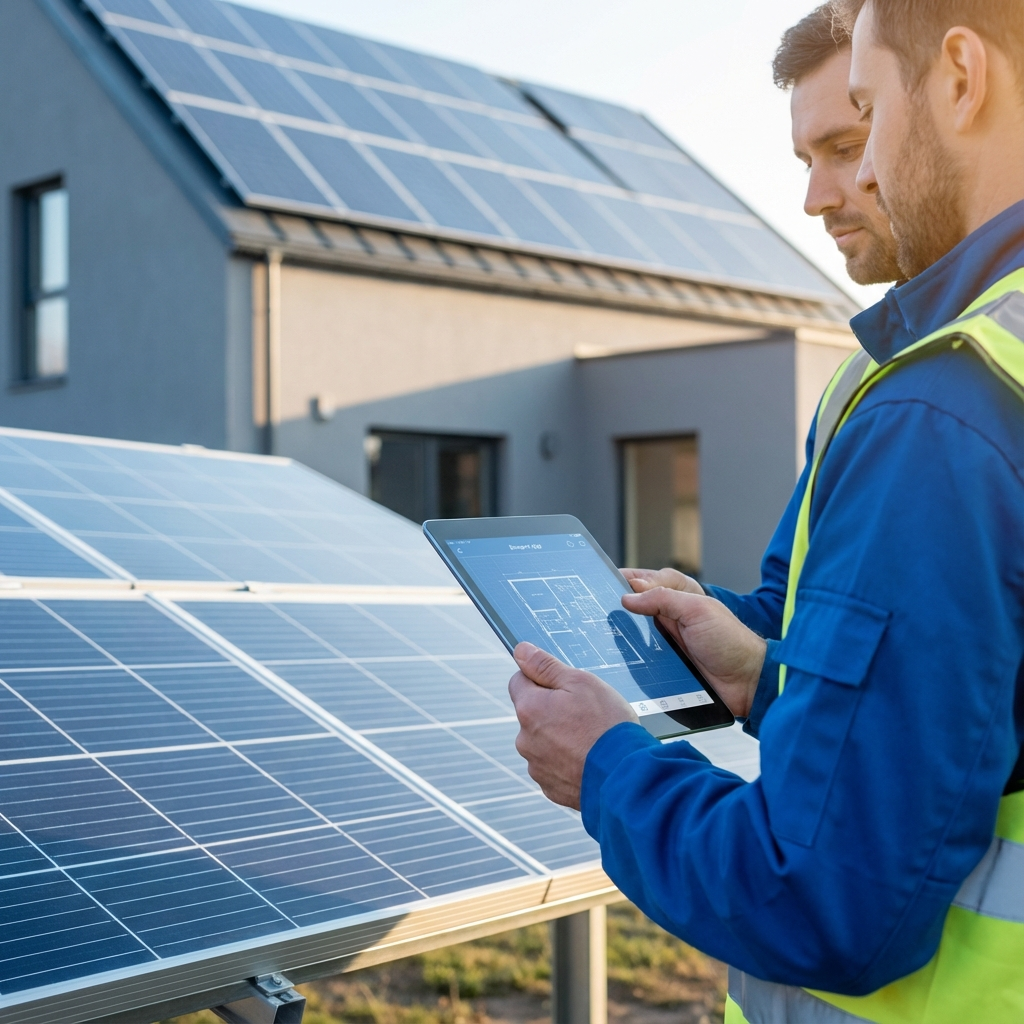
How to think about rooftop vs ground-mount for commercial sites
The basic distinction
- Rooftop solar uses the building roof as the mounting surface. It maximizes existing space and often reduces land-use concerns.
- Ground-mount solar is installed on dedicated racking in open ground near the facility. It permits larger arrays and flexible tilt and orientation.
Here’s the thing, every commercial site is unique. Roof condition, usable roof area, shading, property size, local zoning, and future expansion goals will usually determine which approach is best.
Rooftop Commercial Solar: Pros and Cons
Pros
- Lower land use, no additional real estate required, ideal for urban and infill commercial properties.
- Faster interconnection in many cases because the inverter and main service are onsite on the roof or within the building footprint.
- Typically lower site-prep costs, no large earthworks, and easier cable routing into the building.
- Good for businesses prioritizing minimal visual impact and tight site layouts.
Cons
- Structural upgrades may be needed if the roof is old or can’t handle additional load, adding cost and time.
- Limited by roof area and orientation, which can cap system size and annual energy production.
- Access and safety during installation and maintenance are more complex, especially for tall buildings.
- Roof penetrations and warranty concerns; requires careful coordination with roofing contractors and building owners.
Ground-Mount Commercial Solar: Pros and Cons
Pros
- Greater design flexibility, easier to optimize tilt and azimuth for maximum yield.
- Easier to expand over time, making it attractive for larger facilities with available land.
- Simpler O&M access and often lower long-term maintenance complexity.
- Can incorporate tracking systems to increase annual production and improve financial returns.
Cons
- Requires land, which may be costly or unavailable near some commercial properties.
- Site preparation, grading, and fencing add to initial project costs.
- Potential permitting and zoning hurdles for visibility, setbacks, or historic districts.
- Possible additional interconnection equipment if the array is physically separated from the building service.
Cost, ROI, and performance considerations
- Upfront cost per watt can be similar, but rooftop projects sometimes avoid site-prep costs while ground-mount projects may achieve better kWh/kW by optimizing tilt and tracking.
- When evaluating payback and internal rate of return, consider demand charge reductions, utility rate structures, and the ability to pair with battery storage for peak shaving.
- Commercial battery systems often pair well with both installations, but ground-mount arrays with higher production make storage economics stronger for large demand-management programs. Learn more about commercial battery options on our battery page: https://independentsolaraz.com/solar-battery-storage/
Permitting, timeline, and risks
- Rooftop projects often require roof structural assessments, coordination with roofing warranties, and careful fall-protection planning.
- Ground-mount projects require geotechnical checks, grading permits, and sometimes stormwater management approvals.
- Both need utility interconnection applications; lifecycles vary by utility. Independent Solar manages permitting, structural reviews, and interconnection documents to reduce friction for dealers and property owners.
Use cases: which setup fits which commercial customer
- Retail centers and urban office buildings: rooftop preferred when roof area is adequate and land is scarce.
- Large warehouses, distribution centers, and campuses: ground-mount often better due to land availability and ease of system expansion.
- Multifamily and HOAs: rooftop or carport structures are common; ground-mount is an alternative when open land exists.
- Schools, churches, and municipal buildings: both options are viable, decision depends on site layout and funding sources.
Why dealers and sales reps should care
- Offering both rooftop and ground-mount options expands your addressable market and customer fit.
- Independent Solar provides dealer-friendly pricing, transparent commission structures, technical design support, and a reputation for quality commercial installs. Become a dealer to access training and higher-margin commercial opportunities: https://independentsolar.com/application-form/
- We support financing and tax-credit guidance to help close commercial deals. For an overview of federal tax incentives, see: https://independentsolaraz.com/federal-solar-tax-credit/
Reputation and trust
Independent Solar builds long-term value through professional project management, post-install warranties, and verified customer feedback. Proof you can rely on is available here: https://independentsolar.com/reviews/
FAQs
What is the typical lifespan difference between rooftop and ground-mount systems?
Both systems use the same PV modules and inverters, so module lifespan is similar. Differences come from mounting hardware exposure and maintenance access. Ground-mount racking is easier to inspect and maintain, which can reduce lifecycle O&M costs.
Can a rooftop system be expanded later?
Yes, but expansions are limited by roof area, structural capacity, and shading. Ground-mount systems are generally easier to expand.
How do site constraints influence system choice?
Roof condition, available land, shading analysis, setbacks, and local zoning typically determine the best option. A professional site assessment is essential.
Are ground-mount systems more productive?
They can be, because tilt and orientation are optimized and tracking can be used. That often leads to higher annual kWh per kW.
What about maintenance and safety differences?
Ground-mount arrays are simpler to maintain and safer to access. Rooftop maintenance requires additional fall protection and coordination with building operations.
How do I decide for a property with both viable roof and land?
Run a comparative financial model including installation costs, expected production, demand charge savings, and expansion needs. Independent Solar can provide commercial-grade modeling to inform that decision.
How do batteries change the equation?
Batteries improve demand-charge management and resiliency. Paired systems should be sized to match production and load-shaping goals. Learn more about commercial storage: https://independentsolaraz.com/solar-battery-storage/
Ready to partner with a trusted commercial solar installer?
If you are a dealer, sales rep, or commercial property owner ready to win projects with a dependable partner, apply to our dealer program and get full support: https://independentsolar.com/application-form/
See real customer feedback and build confidence when presenting Independent Solar to clients: https://independentsolar.com/reviews/
For general inquiries, contact our team: https://independentsolaraz.com/contact/
Conclusion
Choosing between rooftop and ground-mount commercial solar comes down to site constraints, long-term goals, and financial modeling. Rooftop projects save land and reduce visual impact, while ground-mount systems unlock higher production, simpler maintenance, and easier expansion. For dealers and channel partners, offering both options and working with a quality-focused installer like Independent Solar strengthens your sales pitch and client outcomes.
Become a Solar Dealer With Independent Solar
Transparent commissions. Strong support. Commercial-grade installs. Real opportunity.
👉 Apply here: https://independentsolar.com/application-form/
Proof You Can Trust
See real customer feedback + install satisfaction: https://independentsolar.com/reviews/






 Arizona:
