
Commercial Battery Storage Solutions for Businesses and Dealers
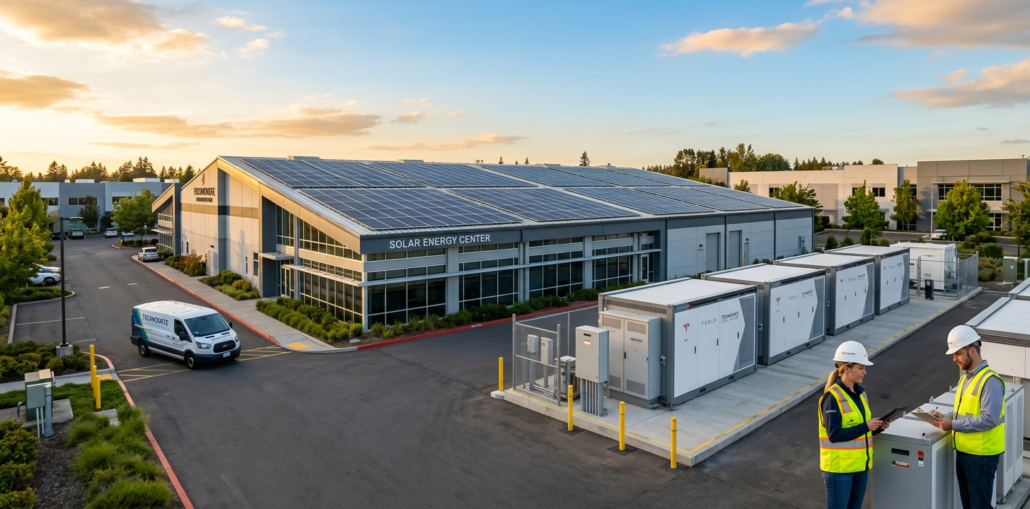
Businesses and dealers are under pressure to cut energy costs, improve resilience, and offer clients turnkey clean-energy packages that actually deliver. Whether you manage a retail property, a multifamily complex, a school, or a portfolio of commercial buildings, adding energy storage changes the economics and the sales conversation.
Here’s the point: pairing solar with robust battery capability turns intermittent generation into reliable capacity, trims demand charges, and creates a compelling product for dealers and channel partners to sell. In this article we’ll unpack how Commercial battery storage solutions work, the key use cases, ROI drivers, and why dealers should partner with a trusted installer like Independent Solar.
Why commercial battery storage matters now
Rising utility rates, tighter margins, and growing reliability concerns mean owners need more than rooftop panels. Battery energy storage systems, or BESS, let businesses:
- Reduce demand charges by shaving peak loads
- Store daytime solar production for evening use
- Provide backup power during outages to protect operations
- Participate in utility programs and grid services for additional revenue
For dealers and sales reps, batteries are a higher-margin differentiator that closes deals faster and increases lifetime customer value. If you want to offer a full-service commercial solar package, storage is no longer optional.
How Commercial Battery Storage Solutions Work
At the system level you’re combining three building blocks: solar generation, battery storage, and intelligent energy management. The process looks like this:
- Solar panels produce electricity during the day.
- An inverter converts DC to AC for building use, while a BESS charges with surplus power.
- A site energy management system dispatches stored energy to reduce demand at peak times or to supply critical loads during an outage.
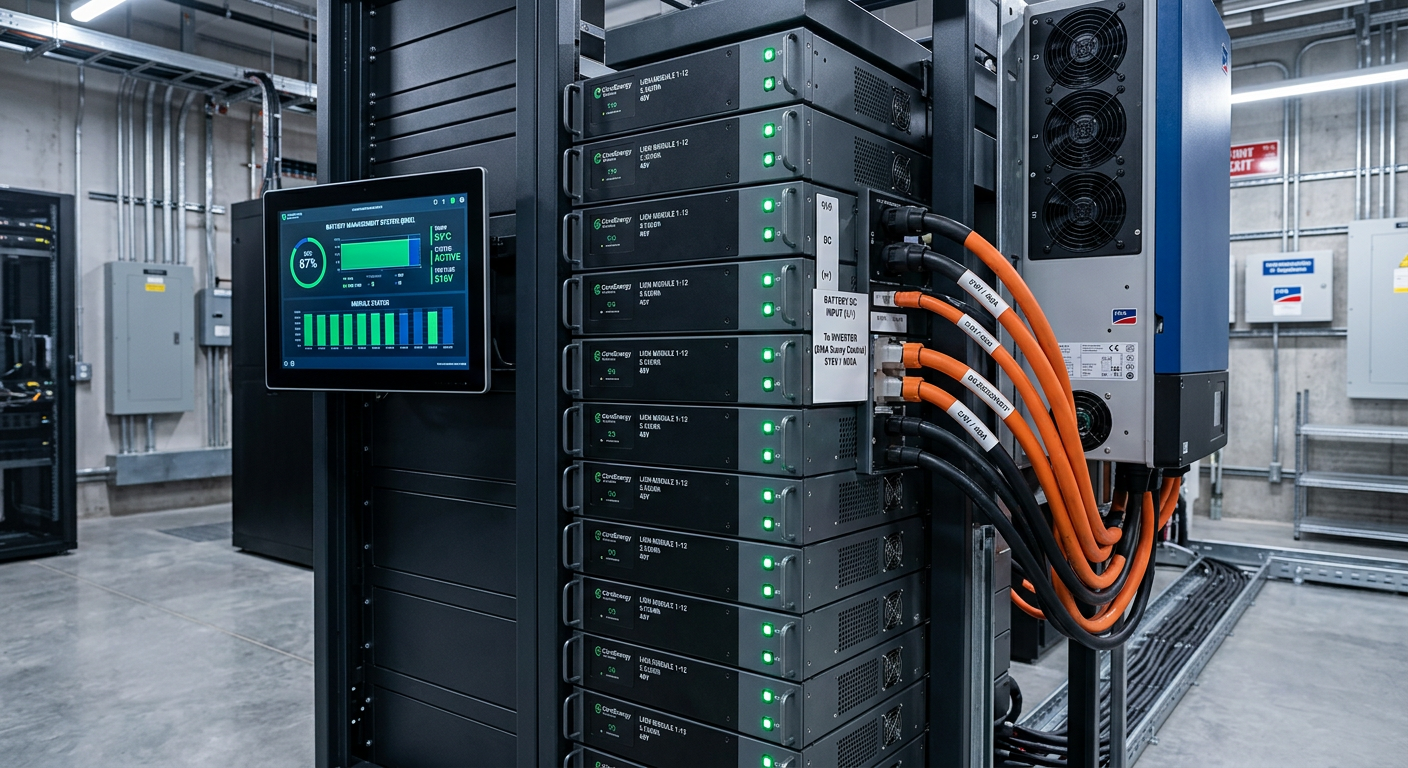
Key components include battery modules (typically lithium-ion for commercial sites), an inverter/charger, a battery management system, and software to schedule charge/discharge and report performance in real time.
Common commercial use cases and value drivers
Demand charge management
Many commercial electric bills include demand charges that can be 20 to 50 percent of a monthly bill. Batteries discharge for short periods during peak demand, lowering that expensive billed demand.
Resilience and critical loads
For hospitality, healthcare, retail, and multifamily properties, even short outages cost money and reputation. Storage tied to a transfer switch keeps essential systems running while the grid is down.
Time-of-use optimization
Shift solar energy into evening hours when utility rates spike. With smart controls, stored energy can be scheduled for the highest-cost windows.
Revenue stacking and grid services
Advanced sites can enroll in demand response, virtual power plant programs, or capacity markets, generating incremental revenue that improves payback.
Site selection and sizing — practical tips for dealers
- Start with the utility bill analysis, focus on demand peaks and time-of-use windows.
- Size batteries by targeting hours of peak shaving, commonly 2–4 hours for commercial sites.
- Confirm permitting and interconnection with local authorities early — commercial projects often need extra engineering.
- Model scenarios: outage resilience, demand-charge reduction, and potential incentive capture to show clients the range of outcomes.
Independent Solar’s commercial team helps partners run accurate payback models, prepare documentation for incentives, and design systems that meet building codes and AHJ requirements.
Financing, incentives, and tax credits
Commercial projects often use a mix of cash, loans, or lease/PPA structures. The federal Investment Tax Credit and recent incentive frameworks have made storage more financially attractive for commercial owners, especially when installed with solar. Independent Solar provides tax-credit guidance and financing options so dealers can present realistic proposals to clients.
For dealers seeking documentation support and streamlined underwriting, become a dealer with Independent Solar and leverage our finance resources. Apply now to join the dealer program: https://independentsolar.com/application-form/.
Choosing technology and partners
Not all battery systems are equal. Priorities for commercial clients include cycle life, warranty terms, integrated monitoring, and an experienced installer with commercial project capability. Dealers win more business by aligning with an installer that offers:
- Commercial-grade warranties and service agreements
- Proven O&M and monitoring packages
- Clear commissioning and acceptance testing
- Dealer-friendly quoting, commissions, and support
Independent Solar delivers commercial-grade battery installations and long-term support. Learn how to partner with a reliable installer and grow your portfolio: https://independentsolar.com/application-form/.
Installation, maintenance, and long-term reliability
Commercial battery systems require professional installation, thermal management, and proactive maintenance to meet warranties. Routine checks, firmware updates, and remote monitoring keep systems performing and minimize downtime. Highlighting these service commitments helps dealers reassure cautious facility managers.
Objections dealers hear and how to answer them
- "Batteries are too expensive." Explain total lifecycle savings: demand charge reduction, resilience value, and possible revenue streams. Show modeled payback.
- "What about warranty or safety?" Point to manufacturer warranty terms, UL listings, and thermal safety systems. Offer maintenance contracts.
- "Is this supported by incentives?" Provide current tax-credit guidance and financing options to reduce upfront cost.
Reputation matters. Share Independent Solar’s customer success stories and reviews to build trust: https://independentsolar.com/reviews/.
Frequently Asked Questions
What is the typical payback period for a commercial battery system?
Payback varies by utility rate structure and use case. Many commercial projects see payback in 4 to 8 years when demand-charge savings and incentives are included.
Can batteries be added to an existing solar system?
Yes, retrofits are common. An assessment checks inverter compatibility, available space, and electrical upgrades.
How long do commercial batteries last?
Modern lithium-ion systems typically offer 10 years or more of warranted life, with expected useful lifetimes of 10–15 years depending on cycling patterns.
Are there incentives for commercial battery storage?
Stand-alone storage and storage paired with solar may qualify for federal and state incentives depending on timing and project specifics. Independent Solar provides tax-credit and incentive guidance for dealers and clients.
What about safety and fire risk?
Commercial systems use battery management systems, certified enclosures, and fire-mitigation strategies. Proper installation and maintenance are key to minimizing risk.
How do I present battery options to a commercial client?
Lead with the business case: show bill savings from demand reduction, resilience value, and financing options. Use site-specific modeling to build trust.
Why should I partner with Independent Solar as a dealer?
We offer transparent commissions, project-level support, commercial-grade installations, and marketing collateral that helps you close more deals. Apply to join our dealer network today: https://independentsolar.com/application-form/.
Ready to grow your commercial pipeline?
If you’re a dealer or sales rep, adding battery storage to your offering unlocks new revenue and improves close rates. Become a dealer with Independent Solar for dedicated commercial support, training, and transparent commissions: https://independentsolar.com/application-form/.
For property owners and facility managers, request a commercial assessment or speak with our team via the contact page: https://independentsolar.com/contact/. And see what clients say about working with us: https://independentsolar.com/reviews/.
Conclusion
Commercial battery storage solutions change the conversation from one-off solar installs to comprehensive energy resilience and savings strategies. Dealers who partner with a reliable installer, offer clear financial modeling, and leverage incentives will win more commercial business. Independent Solar is set up to help dealers and commercial owners through design, financing, installation, and long-term service. Interested in building a repeatable commercial offering? Apply now and join our dealer program: https://independentsolar.com/application-form/.


 Arizona:
