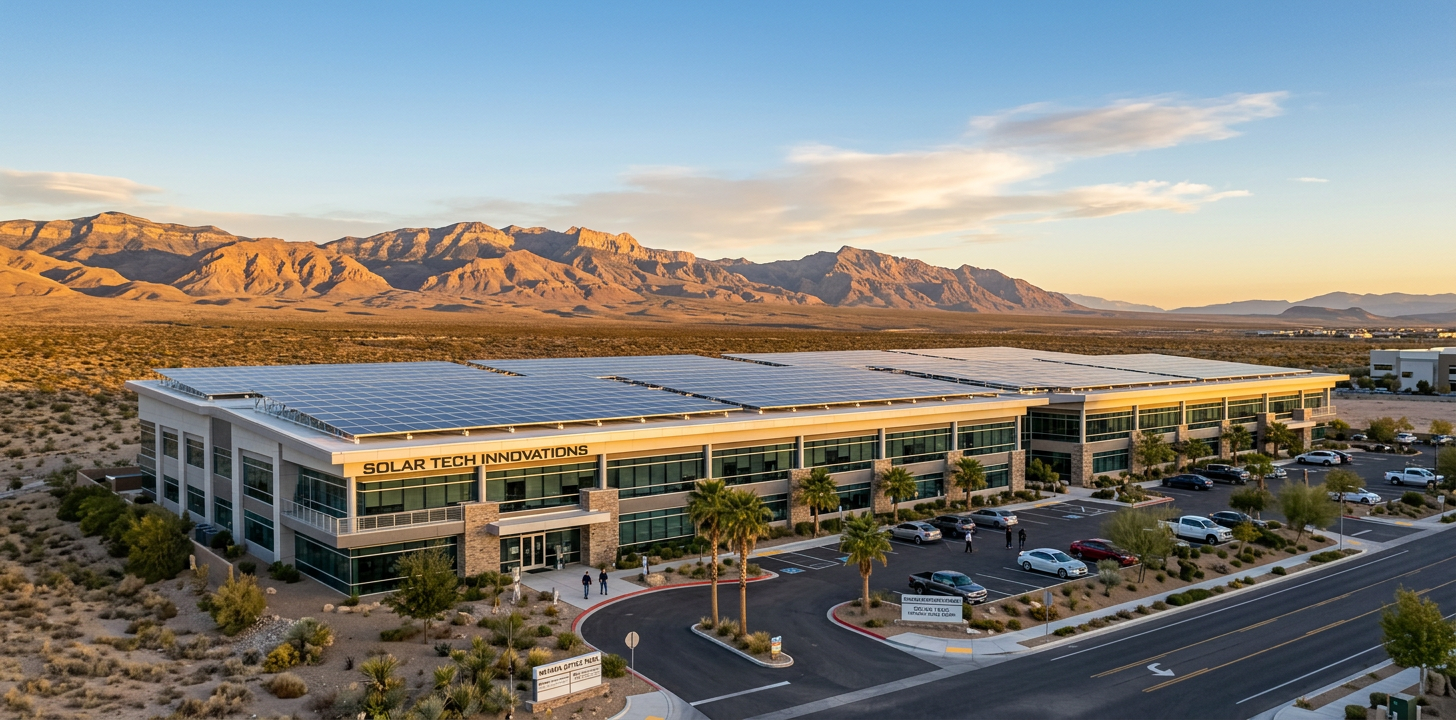
Reliable Commercial Solar Company Nevada: What Proves Trust
A commercial solar proposal can look impressive long before anyone confirms whether the installer can deliver it. For property owners, dealers, and sales reps, the bigger question is not simply who can sell panels. It is who can design, install, communicate, and provide support in a way that protects a major business investment.
A reliable commercial solar company Nevada businesses can confidently choose should make the project easier to evaluate from the first utility-bill review through long-term monitoring and service. That reliability matters equally to B2B partners, because every installation reflects on the dealer or representative who recommended it.
Reliability Is Built Into the Project Process
A dependable installer proves reliability through transparent planning, realistic financial assumptions, disciplined construction, and clear post-install support. Price matters, but the lowest bid can become expensive if the production model is weak, the scope is vague, or the service team disappears after commissioning.
Commercial solar is infrastructure. A retail center, hotel, school, office building, HOA, church, warehouse, or light industrial facility needs a plan built around its actual operating patterns, site constraints, and financial priorities.
| What to Evaluate | Reliable Partner Signal | Risk Signal | Why It Matters |
|---|---|---|---|
| Utility analysis | Reviews interval data and rate structure | Uses rough estimates | Impacts savings model |
| System design | Explains production assumptions | Focuses only on panel count | Protects ROI |
| Project handoff | Clear milestones and contacts | Unclear ownership | Reduces delays |
| Service plan | Monitoring and escalation process | No post-install details | Supports long-term output |
| Partner support | Proposal and client communication help | Dealer is left alone | Protects reputation |
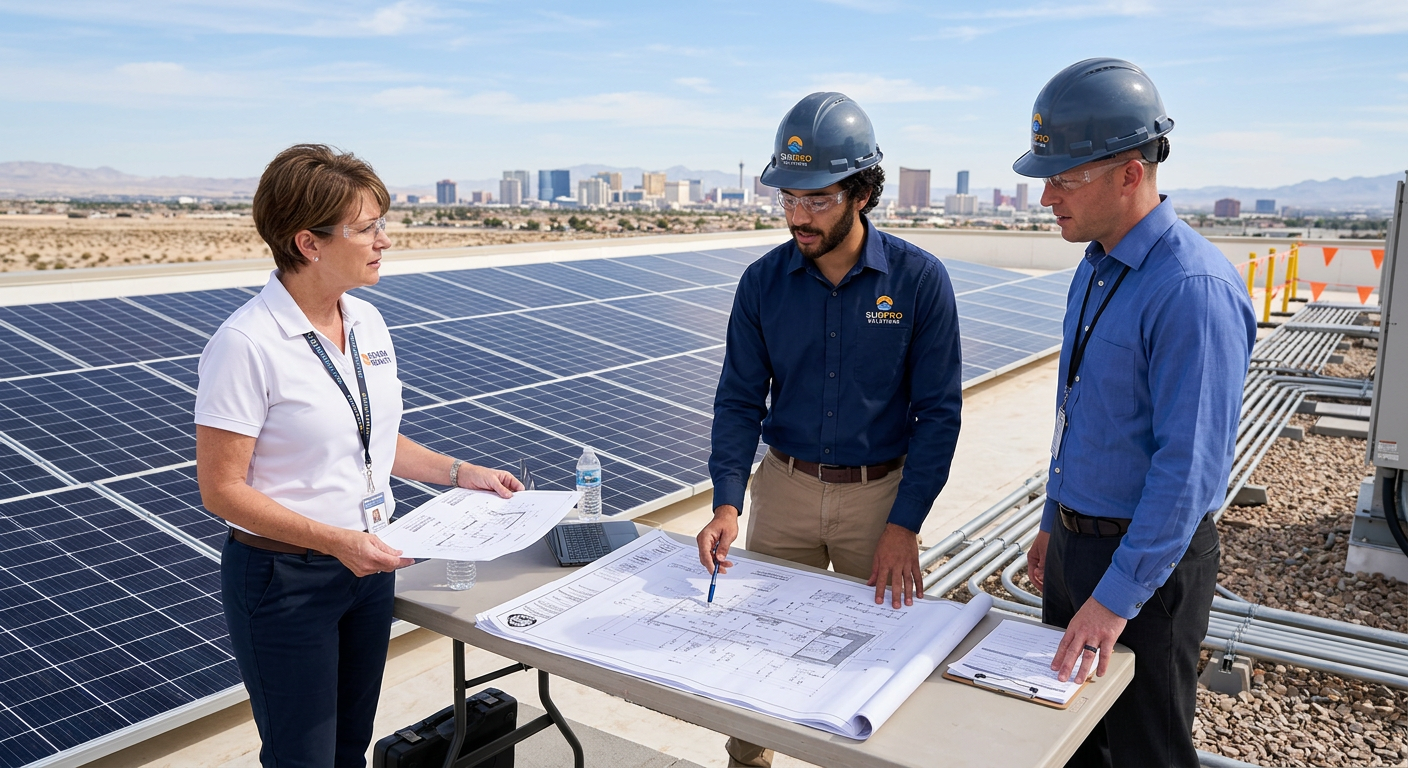
For a commercial buyer, this process should begin with more than roof square footage. We recommend reviewing at least 12 months of utility use, demand patterns, facility hours, upcoming equipment changes, roof age, structural conditions, and resilience needs. Those details shape system size, production timing, battery value, financing options, and the accuracy of projected savings.
Nevada Commercial Solar Decisions Need Better Bill Analysis
A reliable commercial solar company in Nevada should model how a building buys electricity, not just how much electricity it uses. Larger facilities can face demand-related costs, so solar production alone may not tell the full savings story.
For example, a hotel with heavy afternoon cooling loads may benefit from production that aligns with peak HVAC use. A refrigerated warehouse may need a different approach that considers overnight operations, equipment cycling, and backup priorities. Multifamily properties may need to account for common-area meters, tenant loads, amenity spaces, and future EV charging.
That is why a strong proposal clearly identifies:
- Energy charges and time-based usage patterns
- Demand exposure and high-load intervals
- Solar production assumptions and expected degradation
- Roof, electrical, and interconnection requirements
- Battery storage opportunities for peak management or resilience
- Maintenance, monitoring, and warranty responsibilities
The financial model should also identify assumptions instead of burying them. Savings projections can depend on utility rates, future load changes, weather modeling, tax treatment, financing terms, and operational decisions. A credible installer explains the variables so stakeholders can review the project with their finance team, property manager, or board.
Solar Plus Storage Can Strengthen the Business Case
Battery storage is most valuable when it solves a specific operating problem. For many Nevada commercial properties, that can mean reducing high-demand periods, retaining critical loads during an outage, or using stored solar generation later in the day.
Storage is not an automatic fit for every site. We look at interval data, outage risk, operational priorities, and electrical configuration before recommending it. A business with refrigeration, security systems, medical equipment, data needs, elevators, or high late-afternoon demand may have a stronger case than a building with modest, consistent use.
The federal incentive conversation also requires precision. The IRS Clean Electricity Investment Credit states that eligible clean electricity and energy-storage projects placed in service after December 31, 2024 may qualify for a base credit of 6%, with a credit of up to 30% available when prevailing wage and registered apprenticeship requirements are met. Eligibility and tax outcomes depend on project facts, so businesses should confirm details with qualified tax professionals.
Commercial systems are built for long service lives, which makes operations and maintenance part of the ROI conversation. The 2025 National Renewable Energy Laboratory Commercial PV baseline notes that historical commercial PV operations and maintenance costs fell 53% from 2010 to 2020, while capital costs fell 77% over the same period. Lower costs do not eliminate the need for a service plan. They make it even more important to preserve system performance and avoid preventable downtime.
For teams evaluating solar plus storage, our commercial battery storage resource offers a useful starting point for discussing load management, resilience, and system fit.
What Dealers Need From a Solar Installation Partner
Dealers and sales representatives need a partner whose backend execution is as professional as their front-end sales process. A commercial account can involve months of stakeholder meetings, roof reviews, financial discussions, utility coordination, permitting, and construction scheduling. Poor communication at any point can damage the relationship the dealer worked hard to build.
The right solar sales partnership should provide practical support, including:
- Commercial-grade design and proposal assistance
- Clear scope, pricing, and savings assumptions
- Defined client handoffs and project-status communication
- Help with financing and incentive documentation
- Installation coordination and quality oversight
- Monitoring, service, repairs, and future system upgrades
At Independent Solar, we focus on giving dealer partners a company they can represent with confidence across Arizona, Nevada, and Texas. That means treating the project as a long-term business asset, not a one-time transaction. Partners benefit from transparent communication, stronger client conversations, and an installation team that understands commercial complexity.
If you are building a pipeline of commercial opportunities, apply to become an Independent Solar dealer and explore a partnership designed to support credibility as well as growth.
Reputation Is Evidence, Not a Tagline
Public feedback cannot replace technical due diligence, but it can reveal how a company handles communication, follow-through, workmanship, and issues that arise during a project. For commercial buyers and dealer partners, repeated patterns matter more than a single glowing comment or isolated complaint.
We recommend reviewing feedback with a practical lens:
- Do clients mention clear communication and responsive support?
- Are project expectations handled professionally?
- Does the company appear accountable after installation?
- Are there signs of consistent workmanship and organized handoffs?
- Would you feel comfortable attaching your own name to the company?
A dealer's reputation is part of the product. When the installer does not respond, misses deadlines, or fails to resolve service needs, the property owner remembers who made the recommendation. Reviewing Independent Solar customer feedback can help partners and commercial decision-makers assess the experience behind the proposal.
A Practical Due-Diligence Checklist for Nevada Projects
The best solar partner is prepared to answer detailed questions before a contract is signed. Use this checklist to compare commercial installers on substance rather than sales presentation.
Ask for a transparent production and savings model
The proposal should show the system size, estimated generation, assumptions about shading and degradation, utility-rate inputs, and the reasoning behind the expected savings. If the numbers cannot be explained in plain language, they should not be treated as a final business case.
Confirm who owns each step of delivery
Ask who manages engineering, permitting, utility coordination, construction, inspections, commissioning, and service. Clear ownership reduces the chance that important tasks sit between teams without action.
Review roof and electrical readiness early
A commercial system may need structural review, electrical upgrades, roof work, or equipment relocation. Identifying these requirements early creates a more accurate scope and fewer unwelcome changes later.
Compare service plans, not only warranties
A manufacturer warranty and an installer service process are different things. Ask how monitoring works, who receives alerts, what happens when performance drops, and how repairs or expansion projects are handled.
Evaluate commercial experience by property type
Experience should match the project. A team familiar with retail centers may face different constraints than one serving schools, multifamily communities, hospitality sites, or light industrial facilities. Relevant experience improves planning and communication.
For a deeper look at system design, financing considerations, and property-specific opportunities, review our commercial solar solutions for businesses.
Questions Businesses and Dealers Often Ask
How long does a commercial solar project take in Nevada?
Most projects take several months from evaluation through permission to operate, but the exact timeline depends on design complexity, permitting, utility coordination, equipment availability, and construction scope. A reliable installer provides milestone visibility rather than promising a date without reviewing the site.
Is solar worth it for a building with a newer roof?
Yes, a newer roof can be a strong starting point because it may reduce the likelihood of future removal and reinstallation work. The installer should still review structural capacity, roof warranty requirements, drainage, penetrations, and access pathways before final design.
Can battery storage reduce demand charges?
It can, but only when the battery is properly sized and controlled around the facility's highest-demand periods. Interval data is essential because a battery designed without the building's real load profile may not deliver the projected demand-management value.
What should dealers ask before joining a solar dealer program?
Dealers should ask about proposal support, project communication, installation capacity, financing coordination, service procedures, escalation paths, and reputation. The goal is to find a partner that helps protect client confidence after the sale.
How can we evaluate installer reviews fairly?
Look for themes across a meaningful number of reviews, particularly around communication, timeliness, workmanship, and resolution of concerns. Then compare that feedback with references, contract terms, technical qualifications, and the team's willingness to answer direct questions.
Build a Partnership That Supports Your Reputation
Commercial solar sales work best when the installer, dealer, and property owner are aligned around accurate expectations and long-term value. We help partners bring stronger technical resources, transparent support, commercial-grade installations, and a more dependable customer experience to the table.
If you want to represent a solar company with a structured dealer path, submit a dealer partnership application. You can also review real customer experiences before deciding whether our approach fits your business.
The Strongest Choice Is the One That Holds Up
A reliable commercial solar company Nevada businesses can trust does more than provide equipment and a savings estimate. It creates an understandable project plan, ties the system to real operating needs, communicates clearly during construction, and remains available after activation.
For property owners, that approach helps transform solar from a concept into a managed business asset. For dealers and sales reps, it creates the confidence to build relationships around quality, transparency, and long-term performance. When reliability is part of the process from day one, the project is better positioned to deliver value for everyone involved.